.jpg)
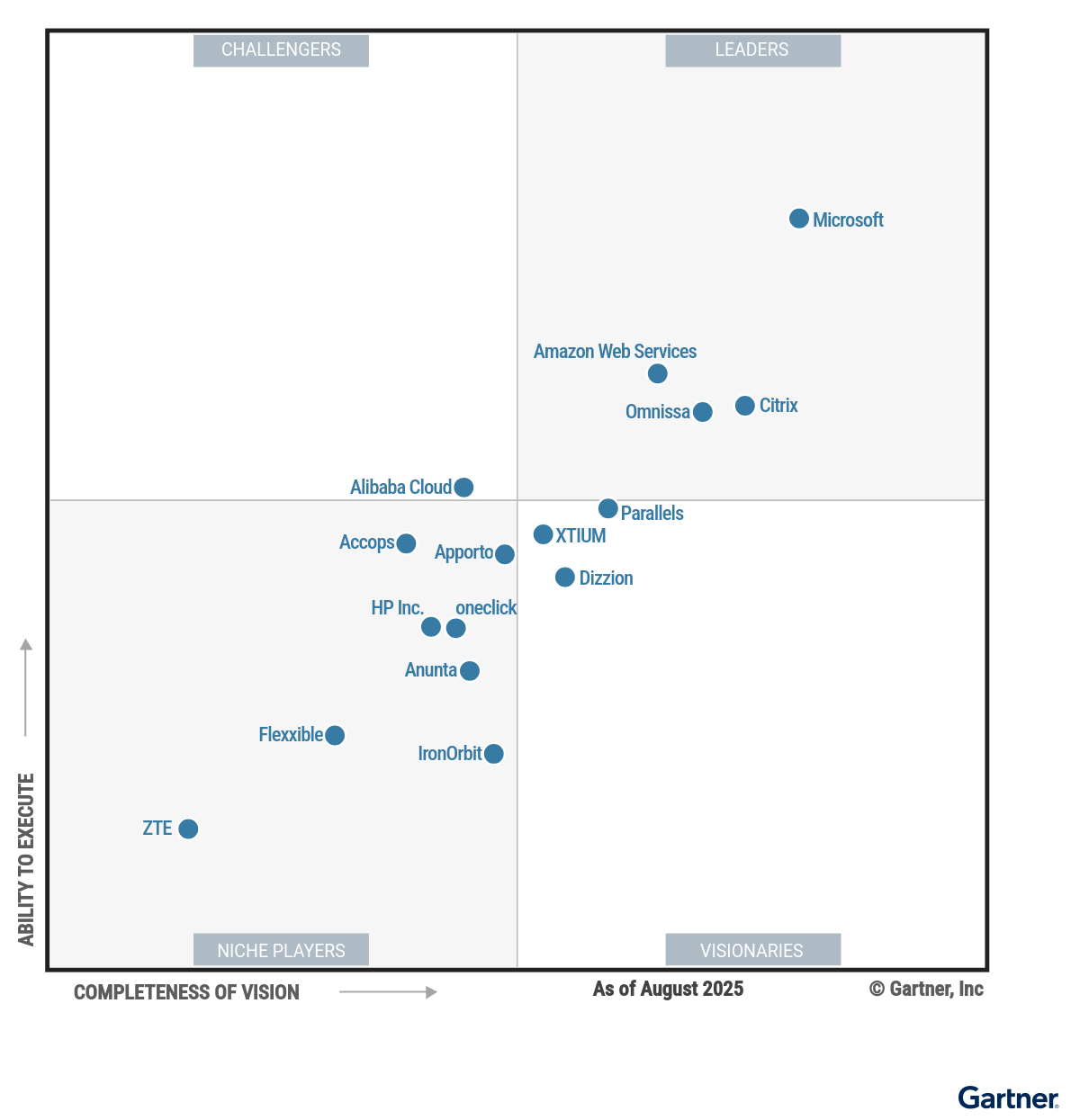
The landscape of the digital workplace has shifted dramatically over the last few years, moving from reactive remote work solutions to strategic, long-term infrastructure. The release of the Gartner Magic Quadrant for Desktop as a Service (DaaS) on August 11, 2025, confirms that virtual desktops are no longer just a niche tool for security-conscious organizations. They are becoming a primary workspace solution, driven by advancements in cost optimization, sustainability, and operational efficiency.
The Evolution of Desktop as a Service in 2025
Gartner defines DaaS as the provision of virtual desktops by public cloud or service providers, encompassing everything from fully managed control planes to streamlined user connections. The 2025 report highlights a significant maturation in the market. While secure remote work remains a core driver, organizations are increasingly deploying DaaS to address broader operational needs. The DaaS market's compound annual growth rate is forecast around 8% for 2025-2029, a stark contrast to the flat revenue growth of on-premises virtual desktop infrastructure, which sees actual user counts declining [3].
According to the report's strategic planning assumptions, the trajectory for adoption is steep:
By 2027, virtual desktops will be cost-effective for 95% of workers (compared to 40% in 2019) [3].
By 2027, virtual desktops will be used as the primary workspace for 20% of workers (up from 10% in 2019) [3].
For organizations, DaaS offers a solution to rising hardware costs, scattered remote teams, and relentless security requirements, providing a compelling alternative to frequent laptop refreshes. The basic promise is to keep data and applications in the cloud, deliver only pixels to any device, and manage everything centrally [2].
Market Leaders and Key Players
The 2025 Magic Quadrant categorizes 16 providers based on their completeness of vision and ability to execute. For businesses evaluating their cloud infrastructure strategy, knowing who sits at the top is vital.
The Leaders
The Leaders quadrant features vendors that demonstrate strong execution, significant market share, and continuous innovation. As of August 2025, the Leaders are:
Microsoft: Leveraging the massive scale of Azure, Microsoft offers Azure Virtual Desktop and Windows 365. Their dominance is supported by deep integration with the Microsoft 365 ecosystem and AI capabilities. Azure Virtual Desktop (AVD) is particularly strong when you already operate within Microsoft 365, benefiting from integration with Entra ID and Teams optimization. Its pay-as-you-go compute model can lead to significantly lower infrastructure spend compared with on-prem servers, often around 30% [2].
Amazon Web Services (AWS): A long-standing player with Amazon WorkSpaces, offering flexibility for both persistent and pooled workloads globally. AWS is notable for its capacity to shift fixed infrastructure expenses into flexible costs, a key advantage of cloud computing [1]. Amazon WorkSpaces targets firms that prioritize simplicity, allowing users to choose Windows or Linux images and pay on an hourly or monthly basis [2].
Citrix: Renowned for its high-fidelity protocol and ability to handle complex, graphic-intensive use cases for large multinationals. Citrix still leads in nuanced functionalities, though many of its offerings have evolved to compete within the broader market [2].
Omnissa: Formerly associated with VMware, Omnissa remains a strong choice for hybrid and multicloud deployments.
Emerging Trends: AI and Intelligent Automation
One of the most critical insights from the report is the increasing role of automation and AI in managing DaaS environments. Vendors are shifting away from simple provisioning toward intelligent operations. This includes using AI to analyze user behavior, predict resource needs, and automate scaling to prevent over-provisioning.
For example, new capabilities allow for "zero-touch" deployment and real-time anomaly detection. This aligns perfectly with modern digital strategies where efficiency is paramount. By integrating intelligent automation into the DaaS layer, businesses can reduce the manual overhead typically associated with managing thousands of endpoints. Incorporating additional tools for ongoing cost optimization and automation is recommended to ensure DaaS effectiveness [3].
Strategic Considerations for Your Business
Implementing DaaS is not merely a software purchase; it is an infrastructure transformation. The report distinguishes between Vendor-Managed DaaS (where the vendor handles the virtualization platform and infrastructure) and Self-Assembled DaaS (where the client configures the broker and infrastructure). Choosing the right model depends on your internal technical expertise and specific business goals. While DaaS can be less expensive in many use cases, managing costs can be challenging with consumption-based billing models, as pay-per-use costs can vary dramatically [3].
At FlowDevs, we understand that technology must serve a business purpose. Whether you are looking to leverage Microsoft's Azure Virtual Desktop for its seamless integration or require a custom cloud infrastructure strategy, the goal remains the same: unlocking efficiency.
Microsoft's Unique Position
The report notes that Microsoft provides a unique advantage for clients already invested in the Microsoft 365 ecosystem. With options ranging from the highly configurable Azure Virtual Desktop to the simplified Windows 365 Cloud PC, Microsoft allows businesses to tailor their approach. However, navigating the complexity of Azure configurations or managing "configuration drift" in Intune requires specialized expertise. Optimizing costs by assessing vendor capabilities for rightsizing virtual machines (VMs) and tuning power management is also crucial [3].
Integrating DaaS into Your Digital Strategy
As virtual desktops become cost-effective for 95% of the workforce, the question is no longer "if" but "how" to implement them effectively. Successful deployment requires more than just licenses; it requires end-to-end digital strategy and process integration.
Key integration points for a modern DaaS environment include:
Process Automation: utilizing Power Automate to streamline user onboarding and provisioning within the virtual environment.
Intelligent Workflows: deploying Copilot Studio to assist users directly within their virtual desktop, enhancing the digital employee experience.
Scalable Infrastructure: building a cloud foundation that supports high-performance computing and rich graphics without unnecessary costs.
Security is also a paramount consideration within DaaS environments. Cloud Access Security Broker (CASB) functionality, for instance, is no longer a standalone product but a core component of broader Security Service Edge (SSE) platforms that integrate data protection, threat defense, and access control [4]. When choosing a DaaS solution, it's vital to consider how it aligns with your overall security posture and integrates with such platforms.
Partnering for Success
Navigating the shift to cloud-based desktops requires a partner who understands both the infrastructure and the intelligent applications that run on top of it. At FlowDevs, we specialize in building the scalable cloud infrastructure that powers modern business. Our expertise in AI, Power Apps, and process integration ensures that your DaaS deployment drives real-world results rather than just adding technical complexity.
If you are looking to modernize your digital workspace or need guidance on optimizing your Azure Virtual Desktop environment, we are here to help bring your technical vision to life.
Ready to streamline your complex workflows? Book a consultation with us today at https://bookings.flowdevs.io.
The landscape of the digital workplace has shifted dramatically over the last few years, moving from reactive remote work solutions to strategic, long-term infrastructure. The release of the Gartner Magic Quadrant for Desktop as a Service (DaaS) on August 11, 2025, confirms that virtual desktops are no longer just a niche tool for security-conscious organizations. They are becoming a primary workspace solution, driven by advancements in cost optimization, sustainability, and operational efficiency.
The Evolution of Desktop as a Service in 2025
Gartner defines DaaS as the provision of virtual desktops by public cloud or service providers, encompassing everything from fully managed control planes to streamlined user connections. The 2025 report highlights a significant maturation in the market. While secure remote work remains a core driver, organizations are increasingly deploying DaaS to address broader operational needs. The DaaS market's compound annual growth rate is forecast around 8% for 2025-2029, a stark contrast to the flat revenue growth of on-premises virtual desktop infrastructure, which sees actual user counts declining [3].
According to the report's strategic planning assumptions, the trajectory for adoption is steep:
By 2027, virtual desktops will be cost-effective for 95% of workers (compared to 40% in 2019) [3].
By 2027, virtual desktops will be used as the primary workspace for 20% of workers (up from 10% in 2019) [3].
For organizations, DaaS offers a solution to rising hardware costs, scattered remote teams, and relentless security requirements, providing a compelling alternative to frequent laptop refreshes. The basic promise is to keep data and applications in the cloud, deliver only pixels to any device, and manage everything centrally [2].
Market Leaders and Key Players
The 2025 Magic Quadrant categorizes 16 providers based on their completeness of vision and ability to execute. For businesses evaluating their cloud infrastructure strategy, knowing who sits at the top is vital.
The Leaders
The Leaders quadrant features vendors that demonstrate strong execution, significant market share, and continuous innovation. As of August 2025, the Leaders are:
Microsoft: Leveraging the massive scale of Azure, Microsoft offers Azure Virtual Desktop and Windows 365. Their dominance is supported by deep integration with the Microsoft 365 ecosystem and AI capabilities. Azure Virtual Desktop (AVD) is particularly strong when you already operate within Microsoft 365, benefiting from integration with Entra ID and Teams optimization. Its pay-as-you-go compute model can lead to significantly lower infrastructure spend compared with on-prem servers, often around 30% [2].
Amazon Web Services (AWS): A long-standing player with Amazon WorkSpaces, offering flexibility for both persistent and pooled workloads globally. AWS is notable for its capacity to shift fixed infrastructure expenses into flexible costs, a key advantage of cloud computing [1]. Amazon WorkSpaces targets firms that prioritize simplicity, allowing users to choose Windows or Linux images and pay on an hourly or monthly basis [2].
Citrix: Renowned for its high-fidelity protocol and ability to handle complex, graphic-intensive use cases for large multinationals. Citrix still leads in nuanced functionalities, though many of its offerings have evolved to compete within the broader market [2].
Omnissa: Formerly associated with VMware, Omnissa remains a strong choice for hybrid and multicloud deployments.
Emerging Trends: AI and Intelligent Automation
One of the most critical insights from the report is the increasing role of automation and AI in managing DaaS environments. Vendors are shifting away from simple provisioning toward intelligent operations. This includes using AI to analyze user behavior, predict resource needs, and automate scaling to prevent over-provisioning.
For example, new capabilities allow for "zero-touch" deployment and real-time anomaly detection. This aligns perfectly with modern digital strategies where efficiency is paramount. By integrating intelligent automation into the DaaS layer, businesses can reduce the manual overhead typically associated with managing thousands of endpoints. Incorporating additional tools for ongoing cost optimization and automation is recommended to ensure DaaS effectiveness [3].
Strategic Considerations for Your Business
Implementing DaaS is not merely a software purchase; it is an infrastructure transformation. The report distinguishes between Vendor-Managed DaaS (where the vendor handles the virtualization platform and infrastructure) and Self-Assembled DaaS (where the client configures the broker and infrastructure). Choosing the right model depends on your internal technical expertise and specific business goals. While DaaS can be less expensive in many use cases, managing costs can be challenging with consumption-based billing models, as pay-per-use costs can vary dramatically [3].
At FlowDevs, we understand that technology must serve a business purpose. Whether you are looking to leverage Microsoft's Azure Virtual Desktop for its seamless integration or require a custom cloud infrastructure strategy, the goal remains the same: unlocking efficiency.
Microsoft's Unique Position
The report notes that Microsoft provides a unique advantage for clients already invested in the Microsoft 365 ecosystem. With options ranging from the highly configurable Azure Virtual Desktop to the simplified Windows 365 Cloud PC, Microsoft allows businesses to tailor their approach. However, navigating the complexity of Azure configurations or managing "configuration drift" in Intune requires specialized expertise. Optimizing costs by assessing vendor capabilities for rightsizing virtual machines (VMs) and tuning power management is also crucial [3].
Integrating DaaS into Your Digital Strategy
As virtual desktops become cost-effective for 95% of the workforce, the question is no longer "if" but "how" to implement them effectively. Successful deployment requires more than just licenses; it requires end-to-end digital strategy and process integration.
Key integration points for a modern DaaS environment include:
Process Automation: utilizing Power Automate to streamline user onboarding and provisioning within the virtual environment.
Intelligent Workflows: deploying Copilot Studio to assist users directly within their virtual desktop, enhancing the digital employee experience.
Scalable Infrastructure: building a cloud foundation that supports high-performance computing and rich graphics without unnecessary costs.
Security is also a paramount consideration within DaaS environments. Cloud Access Security Broker (CASB) functionality, for instance, is no longer a standalone product but a core component of broader Security Service Edge (SSE) platforms that integrate data protection, threat defense, and access control [4]. When choosing a DaaS solution, it's vital to consider how it aligns with your overall security posture and integrates with such platforms.
Partnering for Success
Navigating the shift to cloud-based desktops requires a partner who understands both the infrastructure and the intelligent applications that run on top of it. At FlowDevs, we specialize in building the scalable cloud infrastructure that powers modern business. Our expertise in AI, Power Apps, and process integration ensures that your DaaS deployment drives real-world results rather than just adding technical complexity.
If you are looking to modernize your digital workspace or need guidance on optimizing your Azure Virtual Desktop environment, we are here to help bring your technical vision to life.
Ready to streamline your complex workflows? Book a consultation with us today at https://bookings.flowdevs.io.
Related Blog Posts
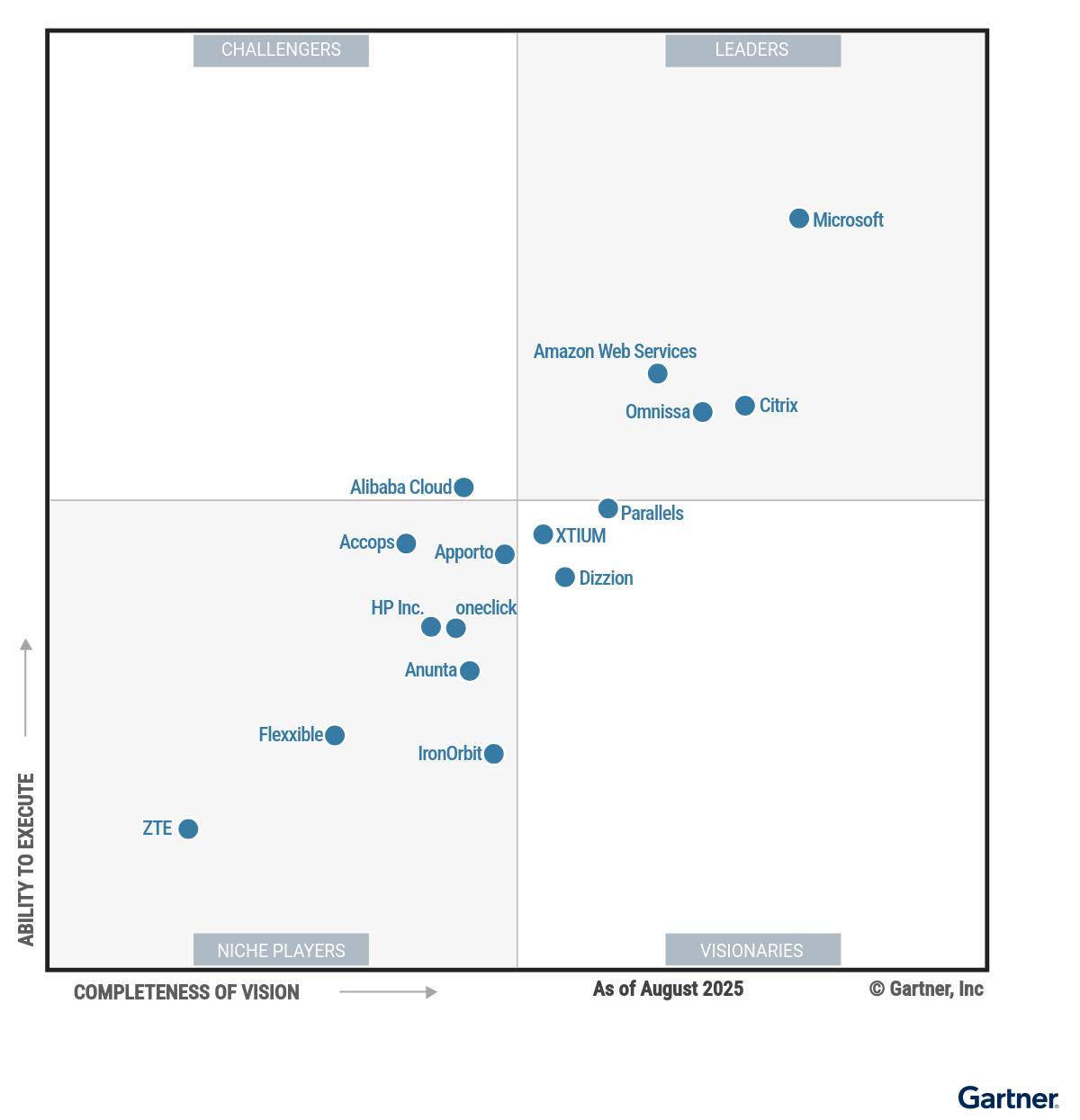
Key Takeaways from the 2025 Gartner Magic Quadrant for Desktop as a Service

10 Days from Concept to Code: How AI Built the Claude Co-work App