.jpg)
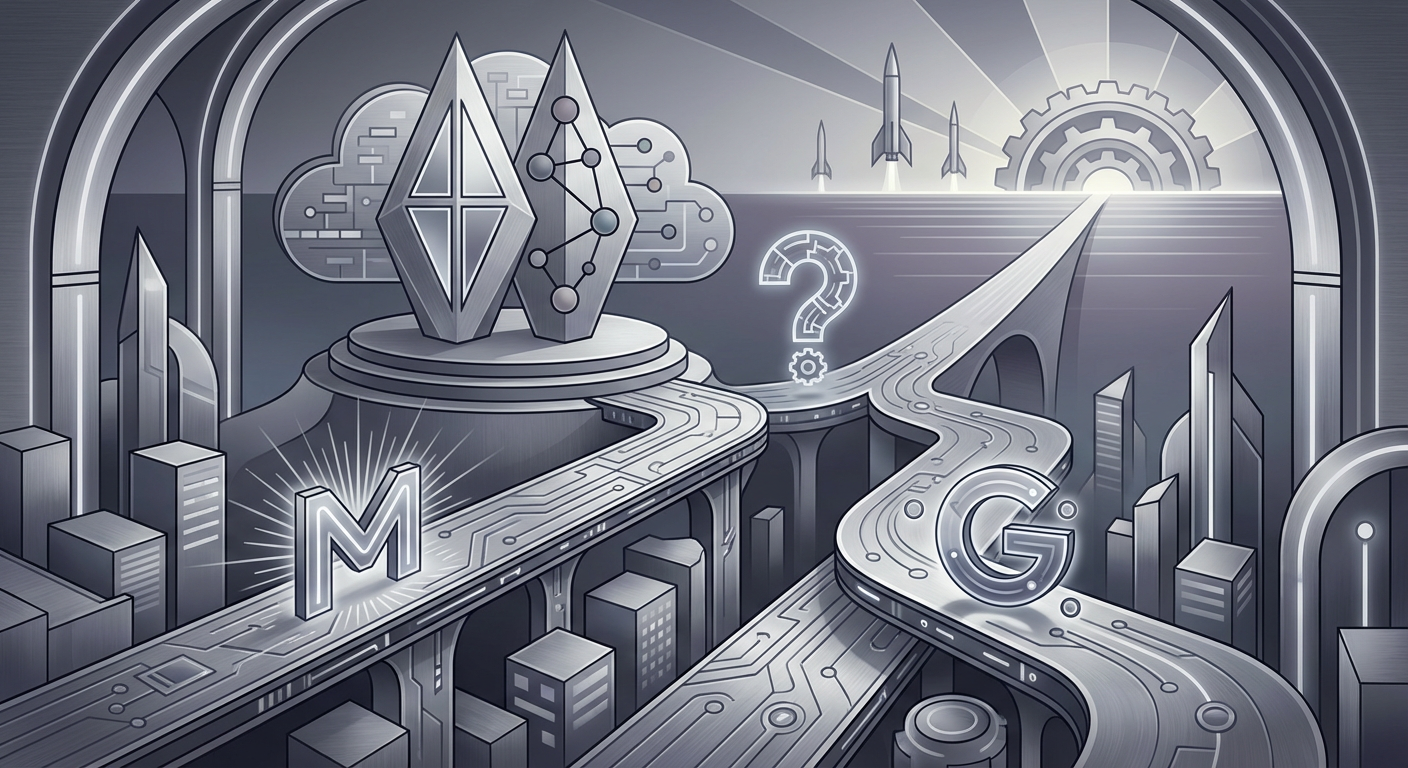
The year is 2026. Your smart fridge has a GPU and displays advertisements on the door. Every startup pitch sounds like a quantum version of a gig economy app, and the technology landscape feels simultaneously overengineered and perpetually in beta. While this vision of the future may sound chaotic, it highlights a critical reality for businesses: the rapid pace of technological evolution is not slowing down.
The Maturation of Artificial Intelligence
By 2026, the initial mania surrounding Large Language Models (LLMs) has begun to settle. We are seeing signs that raw LLM technology is plateauing, shifting the focus from "magical" leaps in intelligence to practical, reliable application. The era of the simple "AI wrapper" is ending.
Indeed, Deloitte predicts that 2026 will see the gap between the promise and reality of AI narrow, with progress coming from fundamentals rather than just headline-grabbing new models. The roar around AI will be "quieter-and smarter," as the work of making AI usable at scale continues to get underway Deloitte. Business leaders are now realizing that meaningful innovation requires more than just a prompt; it requires deep process integration. The market is moving toward:
Intelligent Automation: Just as we predicted, the winners are those who use AI to streamline complex workflows rather than just generating content. This aligns with the "market-pull" observed in deep tech, where commercial urgency is building around practical applications of advanced technologies LinkedIn.
The "Code Janitor" Phenomenon: The flood of AI-generated code in previous years has created a new technical debt crisis. Companies now require skilled engineers to refine, optimize, and secure the "slop" created by early AI coding tools.
Agentic Workflows: Tools like Copilot Studio are no longer novelties but essential business infrastructure, allowing autonomous agents to handle multi-step processes. This shift toward agentic AI is a key driver of cross-industry transformation, with industries using TMT (Technology, Media, and Telecommunications) capabilities to power their own AI innovations Deloitte.
Infrastructure: The Power Problem
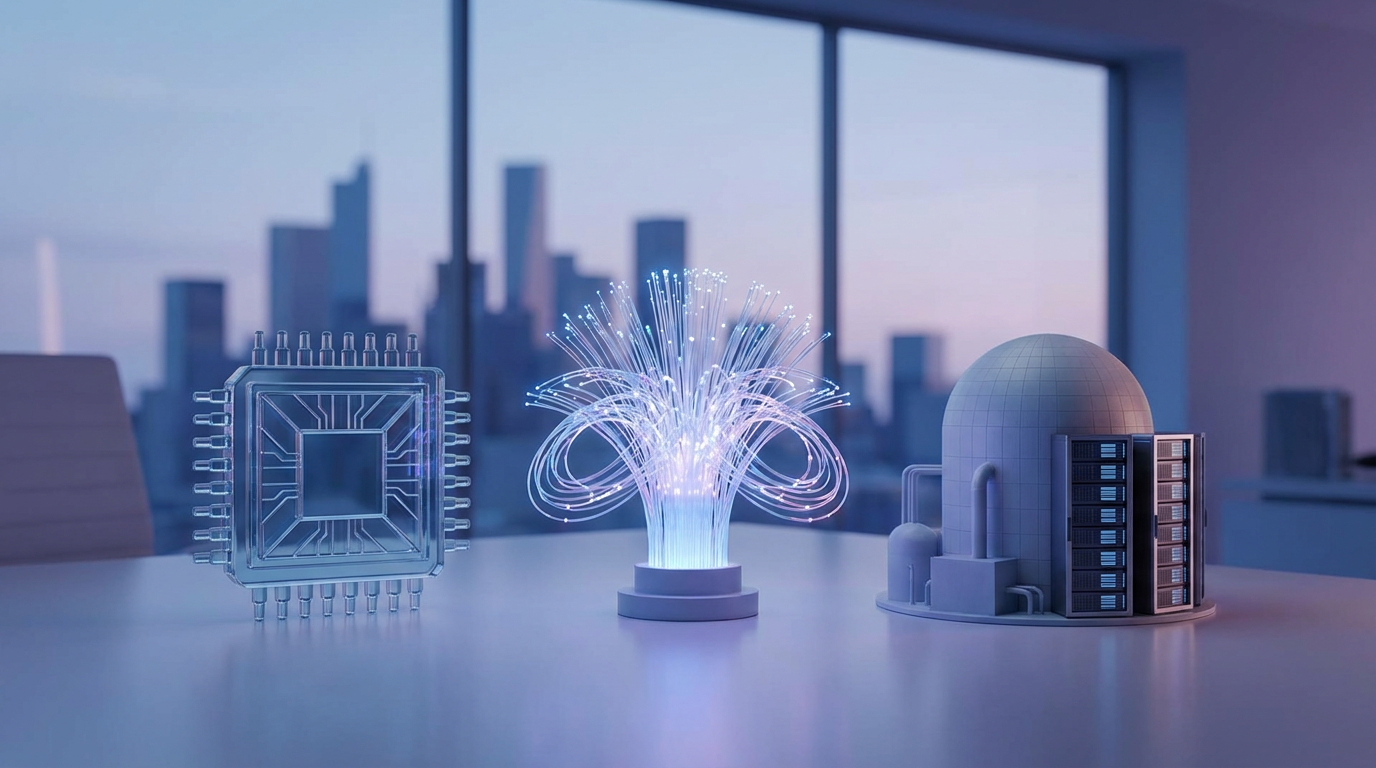
One of the most significant bottlenecks in 2026 is not code, but physics. As reliance on AI models scales, major cloud providers like Azure are facing unprecedented energy demands. The sheer electricity required to power clusters of GPUs is pushing the tech industry toward radical solutions. Goldman Sachs Research estimates that data center power demand will grow 160% by 2030, with data centers' share of global power consumption potentially rising from 1-2% to 3-4% Goldman Sachs. A single ChatGPT query already requires nearly 10 times as much electricity as a Google search, illustrating the dramatic increase in power consumption Goldman Sachs. This surge in electricity demand from data centers has become a critical focus for policymakers and the tech sector alike IEA.
The Rise of Nuclear-Powered Data Centers
We are seeing a resurgence in nuclear energy conversations. Small Modular Reactors (SMRs) are being pitched as dedicated power sources for data centers. Companies are moving away from relying solely on intermittent renewable grids and looking toward self-contained power infrastructure to ensure 99.99% uptime for mission-critical digital systems. This infrastructure push is a direct response to the energy intensity of AI and the need for reliable, robust power solutions.
Quantum Leaps
While traditional computing fights for electricity, quantum computing is finally running verifiable algorithms that surpass supercomputers. With breakthroughs like Google's "Willow" chip and "Quantum Echoes" algorithm, we are edging closer to practical applications that could revolutionize data processing and cryptography. Areas like quantum are moving from academic maturity towards commercial relevance, with 2026 potentially being a "year of catalysis" for these advancements LinkedIn.
The Evolving Developer Ecosystem
Despite the rise of AI, the need for robust software engineering remains critical. The tools are changing, but the fundamentals of architecture and stability are more important than ever. The increasing complexity of AI-driven systems and the focus on integration mean that skilled developers are indispensable. Cybersecurity, too, is experiencing significant transformation, with AI amplifying both the scale of threats and the potential for advanced solutions LinkedIn.
The JavaScript ecosystem continues to innovate relentlessly:
Bun.js: Gaining traction for its speed and built-in support for databases like Postgres and Redis.
Node.js: Continuing to mature with native TypeScript support.
Frontend Wars: while React remains dominant, newer frameworks are emerging to tackle performance issues, proving that the quest for the perfect user interface is never over.
Navigating the Future with FlowDevs
Whether it is 2023 or 2026, the technology landscape is filled with noise. From humanoid robots to digital IDs, distinguishing between hype and value is the key to survival. At FlowDevs, we don't just watch these trends; we build the systems that withstand them. We understand that the future of computing, driven by AI and quantum leaps, requires a deep understanding of both technological innovation and practical application LinkedIn.
We specialize in cutting through the chaos to deliver:
Custom Web Applications: Hand-crafted solutions that go beyond generic AI code, focusing on robust architecture and usability.
Scalable Cloud Infrastructure: Architectures designed for efficiency in an energy-constrained world, optimizing for both performance and sustainability.
End-to-End Digital Strategy: Consulting on Power Apps and Power Automate to ensure your business logic is sound, integrating intelligent automation to streamline complex workflows.
The future might be unpredictable, but your digital strategy doesn't have to be. If you are ready to future-proof your business operations and move beyond the hype cycle, we are ready to partner with you.
Ready to build? Book a consultation with us today at bookings.flowdevs.io.
The year is 2026. Your smart fridge has a GPU and displays advertisements on the door. Every startup pitch sounds like a quantum version of a gig economy app, and the technology landscape feels simultaneously overengineered and perpetually in beta. While this vision of the future may sound chaotic, it highlights a critical reality for businesses: the rapid pace of technological evolution is not slowing down.
The Maturation of Artificial Intelligence
By 2026, the initial mania surrounding Large Language Models (LLMs) has begun to settle. We are seeing signs that raw LLM technology is plateauing, shifting the focus from "magical" leaps in intelligence to practical, reliable application. The era of the simple "AI wrapper" is ending.
Indeed, Deloitte predicts that 2026 will see the gap between the promise and reality of AI narrow, with progress coming from fundamentals rather than just headline-grabbing new models. The roar around AI will be "quieter-and smarter," as the work of making AI usable at scale continues to get underway Deloitte. Business leaders are now realizing that meaningful innovation requires more than just a prompt; it requires deep process integration. The market is moving toward:
Intelligent Automation: Just as we predicted, the winners are those who use AI to streamline complex workflows rather than just generating content. This aligns with the "market-pull" observed in deep tech, where commercial urgency is building around practical applications of advanced technologies LinkedIn.
The "Code Janitor" Phenomenon: The flood of AI-generated code in previous years has created a new technical debt crisis. Companies now require skilled engineers to refine, optimize, and secure the "slop" created by early AI coding tools.
Agentic Workflows: Tools like Copilot Studio are no longer novelties but essential business infrastructure, allowing autonomous agents to handle multi-step processes. This shift toward agentic AI is a key driver of cross-industry transformation, with industries using TMT (Technology, Media, and Telecommunications) capabilities to power their own AI innovations Deloitte.
Infrastructure: The Power Problem
One of the most significant bottlenecks in 2026 is not code, but physics. As reliance on AI models scales, major cloud providers like Azure are facing unprecedented energy demands. The sheer electricity required to power clusters of GPUs is pushing the tech industry toward radical solutions. Goldman Sachs Research estimates that data center power demand will grow 160% by 2030, with data centers' share of global power consumption potentially rising from 1-2% to 3-4% Goldman Sachs. A single ChatGPT query already requires nearly 10 times as much electricity as a Google search, illustrating the dramatic increase in power consumption Goldman Sachs. This surge in electricity demand from data centers has become a critical focus for policymakers and the tech sector alike IEA.
The Rise of Nuclear-Powered Data Centers
We are seeing a resurgence in nuclear energy conversations. Small Modular Reactors (SMRs) are being pitched as dedicated power sources for data centers. Companies are moving away from relying solely on intermittent renewable grids and looking toward self-contained power infrastructure to ensure 99.99% uptime for mission-critical digital systems. This infrastructure push is a direct response to the energy intensity of AI and the need for reliable, robust power solutions.
Quantum Leaps
While traditional computing fights for electricity, quantum computing is finally running verifiable algorithms that surpass supercomputers. With breakthroughs like Google's "Willow" chip and "Quantum Echoes" algorithm, we are edging closer to practical applications that could revolutionize data processing and cryptography. Areas like quantum are moving from academic maturity towards commercial relevance, with 2026 potentially being a "year of catalysis" for these advancements LinkedIn.
The Evolving Developer Ecosystem
Despite the rise of AI, the need for robust software engineering remains critical. The tools are changing, but the fundamentals of architecture and stability are more important than ever. The increasing complexity of AI-driven systems and the focus on integration mean that skilled developers are indispensable. Cybersecurity, too, is experiencing significant transformation, with AI amplifying both the scale of threats and the potential for advanced solutions LinkedIn.
The JavaScript ecosystem continues to innovate relentlessly:
Bun.js: Gaining traction for its speed and built-in support for databases like Postgres and Redis.
Node.js: Continuing to mature with native TypeScript support.
Frontend Wars: while React remains dominant, newer frameworks are emerging to tackle performance issues, proving that the quest for the perfect user interface is never over.
Navigating the Future with FlowDevs
Whether it is 2023 or 2026, the technology landscape is filled with noise. From humanoid robots to digital IDs, distinguishing between hype and value is the key to survival. At FlowDevs, we don't just watch these trends; we build the systems that withstand them. We understand that the future of computing, driven by AI and quantum leaps, requires a deep understanding of both technological innovation and practical application LinkedIn.
We specialize in cutting through the chaos to deliver:
Custom Web Applications: Hand-crafted solutions that go beyond generic AI code, focusing on robust architecture and usability.
Scalable Cloud Infrastructure: Architectures designed for efficiency in an energy-constrained world, optimizing for both performance and sustainability.
End-to-End Digital Strategy: Consulting on Power Apps and Power Automate to ensure your business logic is sound, integrating intelligent automation to streamline complex workflows.
The future might be unpredictable, but your digital strategy doesn't have to be. If you are ready to future-proof your business operations and move beyond the hype cycle, we are ready to partner with you.
Ready to build? Book a consultation with us today at bookings.flowdevs.io.
Related Blog Posts

Introducing the Codex App: The Future of AI-Assisted Development
Building the Digital Trust Architecture: A Strategic Shift for 2026