.jpg)

In the world of enterprise technology, looking ahead isn't just about daydreaming. It is about survival and strategy. While Microsoft typically operates on a tight six-month release cadence, announcing features broadly for "Wave 1" (April to September) and "Wave 2" (October to March), savvy business leaders and technologists are already looking toward the horizon. The year 2026 might sound far off, but given the blistering pace of AI adoption, it is right around the corner.
Based on the current trajectory of Copilot Studio, Dataverse, and the shift toward agentic AI, we can build a strong forecast for what the Microsoft Power Platform 2026 Release Wave 1 will likely bring to the table. We are moving away from simple automation and into the era of autonomous business operation. Let's break down the major trends we anticipate will define this release and how they will change the way you work.
From Copilots to Fully Autonomous Agents
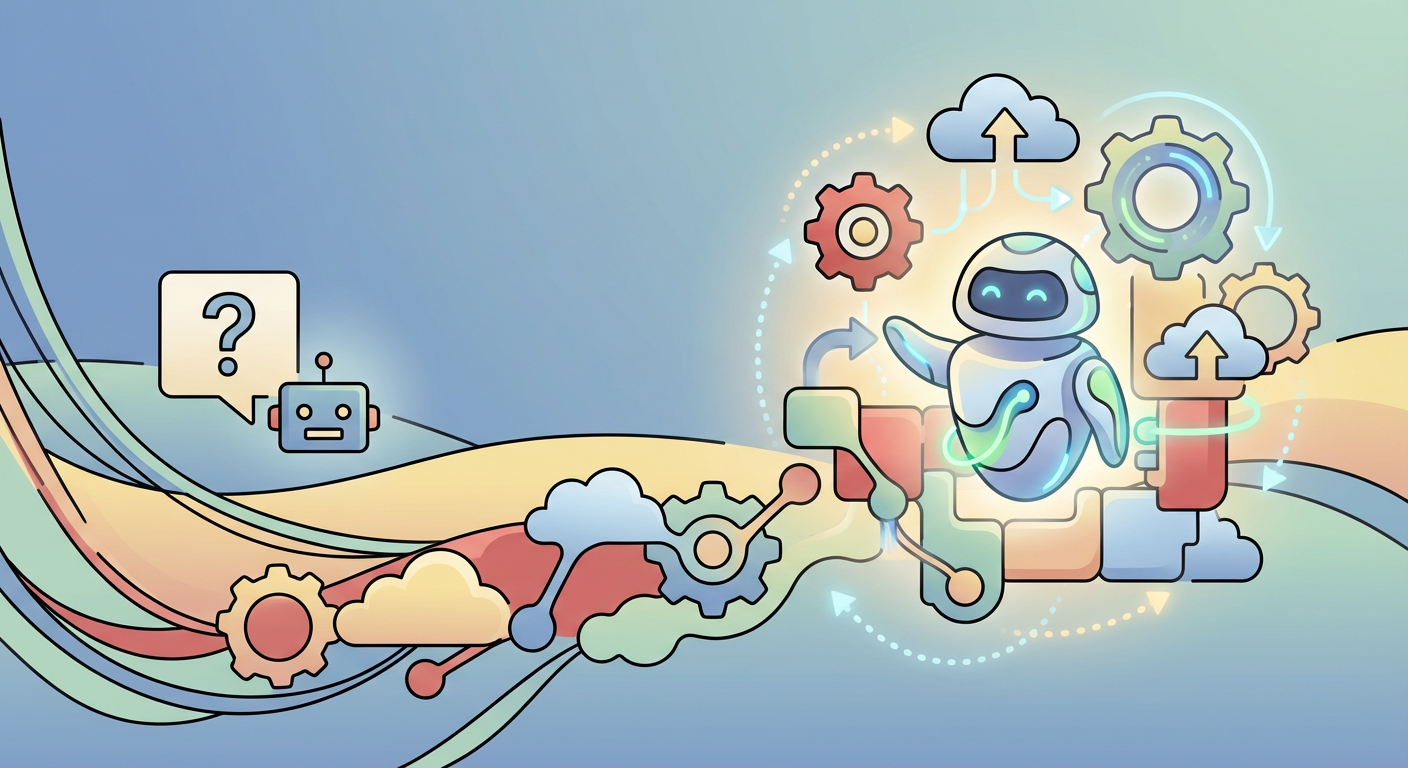
Right now, we are in the golden age of the "Assistant." You ask Copilot a question, and it gives you an answer. You ask it to draft an email, and it writes the text. But by 2026, the concept of a "Copilot" will have evolved into fully autonomous agents. Microsoft's 2025 release wave 2, which covers features slated for October 2025 through March 2026, already emphasizes the shift toward "AI agents" that act as proactive partners to drive better business outcomes, redefining productivity and fundamentally changing how work gets done (Source 2). Business Central, for example, is already planning features like "Give more instructions for the agent when you review its tasks" and capabilities to "Use Sales Order Agent to automate sales order-taking" for public preview in late 2025 (Source 1).
Currently, you have to prompt the AI. In future waves, we expect the platform to shift toward "Goal-Based" automation. Instead of building a Power Automate flow step-by-step, you might simply tell the system: "Ensure all invoices under $5,000 are processed within 24 hours."
The system would then:
- Identify the necessary data sources in Dataverse.
- Construct the logic required to route approvals.
- Monitor its own performance and suggest optimizations.
For us at FlowDevs, this means our role shifts from simply connecting triggers and actions to architecting the governance boundaries that allow these agents to operate safely.
The Dissolution of the "App" Concept
One of the most fascinating shifts we see coming in the 2026 timeframe is the blurring of lines between Power Apps, Power Pages, and Microsoft Teams. The traditional idea that you must open a specific "app" to do a specific task is slowly becoming obsolete. The Microsoft Power Platform features arriving in the 2025 release wave 2 a period extending into early 2026 are already hinting at significant new capabilities across the platform (Source 3).
Context-Aware Interfaces
Imagine interfaces that assemble themselves based on what you are doing. If you are a field technician inspecting a wind turbine, your device shouldn't just show a static Power App. It should dynamically surface the schematics, the history of repairs, and the safety checklist, generated in real-time by the context of your location and role.
By 2026, we anticipate "Generative UI" will be a standard feature in Release Wave 1. This means developers will focus less on pixel-perfect positioning of buttons and more on defining the data relationships. The AI will handle the presentation layer, creating the most efficient interface for the specific user at that specific moment.
Self-Healing Automation Architecture
Anyone who has managed complex Power Automate flows knows the pain of a broken connector or a changed data schema. It stops business cold. A major focus for the roadmap leading up to 2026 is system resilience.
We predict the introduction of "Self-Healing Workflows." When a process encounters an error, instead of just sending a failure notification, the system will diagnose the break. If an API endpoint has changed, the AI could analyze the new documentation, attempt to re-map the fields, and run a test transaction effectively patching the leak without human intervention.
This does not eliminate the need for oversight, but it does change the maintenance game drastically. It allows teams to focus on innovation rather than constantly fixing what used to work yesterday.
Governance as a Native Intelligence
With great power comes great responsibility, and the explosion of low-code development has terrified many IT security directors. As we approach 2026, governance will no longer be a set of rules you have to manually enforce; it will be baked into the platform's DNA. The 2025 release wave 2 for Dynamics 365 and Microsoft Power Platform highlights hundreds of new features poised to transform businesses (Source 3), many of which are expected to include advanced AI-driven governance capabilities.
We expect to see:
- Predictive Policy Enforcement: The platform will warn makers if a solution they are building violates a compliance rule before they even hit "save."
- Automated DLP Evolution: Data Loss Prevention policies that adapt dynamically based on threat patterns rather than static lists.
- Smart Environment Management: AI that automatically archives unused apps and cleans up developer environments to maintain hygiene.
Preparing Your Business for 2026
It is easy to get swept up in the sci-fi excitement of what is coming, but there is a practical reality here. To take advantage of autonomous agents and self-healing systems in 2026, your data foundation needs to be solid today.
If your data is currently trapped in silos, disorganized, or unstructured, no amount of future AI will be able to help. The systems of the future thrive on clean, integrated data ecosystems.
At FlowDevs, we help organizations bridge the gap between their current reality and this intelligent future. Whether it is setting up robust Power Automate workflows or deploying custom Copilots that actually drive value, we build the digital infrastructure that makes future innovation possible.
If you want to ensure your architecture is ready for the next wave of evolution, let's have a conversation.
Ready to future-proof your digital strategy? Book a consultation with us at https://bookings.flowdevs.io.
In the world of enterprise technology, looking ahead isn't just about daydreaming. It is about survival and strategy. While Microsoft typically operates on a tight six-month release cadence, announcing features broadly for "Wave 1" (April to September) and "Wave 2" (October to March), savvy business leaders and technologists are already looking toward the horizon. The year 2026 might sound far off, but given the blistering pace of AI adoption, it is right around the corner.
Based on the current trajectory of Copilot Studio, Dataverse, and the shift toward agentic AI, we can build a strong forecast for what the Microsoft Power Platform 2026 Release Wave 1 will likely bring to the table. We are moving away from simple automation and into the era of autonomous business operation. Let's break down the major trends we anticipate will define this release and how they will change the way you work.
From Copilots to Fully Autonomous Agents
Right now, we are in the golden age of the "Assistant." You ask Copilot a question, and it gives you an answer. You ask it to draft an email, and it writes the text. But by 2026, the concept of a "Copilot" will have evolved into fully autonomous agents. Microsoft's 2025 release wave 2, which covers features slated for October 2025 through March 2026, already emphasizes the shift toward "AI agents" that act as proactive partners to drive better business outcomes, redefining productivity and fundamentally changing how work gets done (Source 2). Business Central, for example, is already planning features like "Give more instructions for the agent when you review its tasks" and capabilities to "Use Sales Order Agent to automate sales order-taking" for public preview in late 2025 (Source 1).
Currently, you have to prompt the AI. In future waves, we expect the platform to shift toward "Goal-Based" automation. Instead of building a Power Automate flow step-by-step, you might simply tell the system: "Ensure all invoices under $5,000 are processed within 24 hours."
The system would then:
- Identify the necessary data sources in Dataverse.
- Construct the logic required to route approvals.
- Monitor its own performance and suggest optimizations.
For us at FlowDevs, this means our role shifts from simply connecting triggers and actions to architecting the governance boundaries that allow these agents to operate safely.
The Dissolution of the "App" Concept
One of the most fascinating shifts we see coming in the 2026 timeframe is the blurring of lines between Power Apps, Power Pages, and Microsoft Teams. The traditional idea that you must open a specific "app" to do a specific task is slowly becoming obsolete. The Microsoft Power Platform features arriving in the 2025 release wave 2 a period extending into early 2026 are already hinting at significant new capabilities across the platform (Source 3).
Context-Aware Interfaces
Imagine interfaces that assemble themselves based on what you are doing. If you are a field technician inspecting a wind turbine, your device shouldn't just show a static Power App. It should dynamically surface the schematics, the history of repairs, and the safety checklist, generated in real-time by the context of your location and role.
By 2026, we anticipate "Generative UI" will be a standard feature in Release Wave 1. This means developers will focus less on pixel-perfect positioning of buttons and more on defining the data relationships. The AI will handle the presentation layer, creating the most efficient interface for the specific user at that specific moment.
Self-Healing Automation Architecture
Anyone who has managed complex Power Automate flows knows the pain of a broken connector or a changed data schema. It stops business cold. A major focus for the roadmap leading up to 2026 is system resilience.
We predict the introduction of "Self-Healing Workflows." When a process encounters an error, instead of just sending a failure notification, the system will diagnose the break. If an API endpoint has changed, the AI could analyze the new documentation, attempt to re-map the fields, and run a test transaction effectively patching the leak without human intervention.
This does not eliminate the need for oversight, but it does change the maintenance game drastically. It allows teams to focus on innovation rather than constantly fixing what used to work yesterday.
Governance as a Native Intelligence
With great power comes great responsibility, and the explosion of low-code development has terrified many IT security directors. As we approach 2026, governance will no longer be a set of rules you have to manually enforce; it will be baked into the platform's DNA. The 2025 release wave 2 for Dynamics 365 and Microsoft Power Platform highlights hundreds of new features poised to transform businesses (Source 3), many of which are expected to include advanced AI-driven governance capabilities.
We expect to see:
- Predictive Policy Enforcement: The platform will warn makers if a solution they are building violates a compliance rule before they even hit "save."
- Automated DLP Evolution: Data Loss Prevention policies that adapt dynamically based on threat patterns rather than static lists.
- Smart Environment Management: AI that automatically archives unused apps and cleans up developer environments to maintain hygiene.
Preparing Your Business for 2026
It is easy to get swept up in the sci-fi excitement of what is coming, but there is a practical reality here. To take advantage of autonomous agents and self-healing systems in 2026, your data foundation needs to be solid today.
If your data is currently trapped in silos, disorganized, or unstructured, no amount of future AI will be able to help. The systems of the future thrive on clean, integrated data ecosystems.
At FlowDevs, we help organizations bridge the gap between their current reality and this intelligent future. Whether it is setting up robust Power Automate workflows or deploying custom Copilots that actually drive value, we build the digital infrastructure that makes future innovation possible.
If you want to ensure your architecture is ready for the next wave of evolution, let's have a conversation.
Ready to future-proof your digital strategy? Book a consultation with us at https://bookings.flowdevs.io.
Related Blog Posts
One Meeting, Infinite Impact: How FlowDevs is Revolutionizing AgTech at the Speed of AI

Crushing Technical Debt: How Low-Code Platforms Clear the Way for Innovation