.jpg)
Vibe Coding is Here: How AI Solved a Critical Bug in 15 Minutes
Vibe coding is no longer a futuristic concept reserved for tech demos; it is the operating reality of modern software development right now. At FlowDevs, we recently proved how this approach transforms debugging from a week-long struggle into a 15-minute victory.
The "File Not Found" Phantom
We were battling a persistent bug in one of our products—a standard .NET "file not found" error that was elusive enough to stump even pro developers. After working with our partner, Andy, and attempting numerous code upgrades, uninstalls, and reinstalls, we realized the issue wasn't in the codebase itself, but in how the software interacted with the environment.
The culprit was stale registry keys. When the software referenced these keys and received a null value, the entire process would crash. We verified this by manually deleting the keys, which allowed the software to run, and adding them back, which forced the crash. We understood the logic, but we needed a permanent fix.
Accelerating the Fix with Gemini CLI
This is where the true power of vibe coding comes into play. Instead of spending hours writing boilerplate exception handling, I turned to the Gemini CLI on my Windows 365 desktop.
The process was intuitive and rapid:
The Prompt: I explained to Gemini that checking a specific registry key resulted in a null value that crashed the .NET application. I asked it to resolve the logic error so the process wouldn't fail.
The Verify: Gemini implemented the fix. I created a Pull Request in GitHub to visually compare the old file against the new one (the "diffs") to ensure integrity.
The Deployment: I built and signed the executable, then immediately pushed it to our storage blob.
The 15-Minute Turnaround
In the final 15 minutes of an hour-long client meeting, we went from identifying the root cause to a deployed solution. Andy downloaded the new binary, ran it against the problematic registry keys, and instead of a hard crash, the log file simply read: "Warning: Found stale registry keys." The program continued successfully.
Conclusion: The New Fundamentals
This experience illustrates the core definition of vibe coding. It is not just about writing syntax faster; it is about testing, developing, and understanding the fundamentals of program execution rather than code execution.
As developers, we now have the power to write better code faster than ever before. What would have been impossible—or at least painfully slow—just one year ago is now a standard workflow. We can build, sign, push, and validate with a customer in minutes.
Thanks, Gemini. Happy vibing.
- Justin
Vibe Coding is Here: How AI Solved a Critical Bug in 15 Minutes
Vibe coding is no longer a futuristic concept reserved for tech demos; it is the operating reality of modern software development right now. At FlowDevs, we recently proved how this approach transforms debugging from a week-long struggle into a 15-minute victory.
The "File Not Found" Phantom
We were battling a persistent bug in one of our products—a standard .NET "file not found" error that was elusive enough to stump even pro developers. After working with our partner, Andy, and attempting numerous code upgrades, uninstalls, and reinstalls, we realized the issue wasn't in the codebase itself, but in how the software interacted with the environment.
The culprit was stale registry keys. When the software referenced these keys and received a null value, the entire process would crash. We verified this by manually deleting the keys, which allowed the software to run, and adding them back, which forced the crash. We understood the logic, but we needed a permanent fix.
Accelerating the Fix with Gemini CLI
This is where the true power of vibe coding comes into play. Instead of spending hours writing boilerplate exception handling, I turned to the Gemini CLI on my Windows 365 desktop.
The process was intuitive and rapid:
The Prompt: I explained to Gemini that checking a specific registry key resulted in a null value that crashed the .NET application. I asked it to resolve the logic error so the process wouldn't fail.
The Verify: Gemini implemented the fix. I created a Pull Request in GitHub to visually compare the old file against the new one (the "diffs") to ensure integrity.
The Deployment: I built and signed the executable, then immediately pushed it to our storage blob.
The 15-Minute Turnaround
In the final 15 minutes of an hour-long client meeting, we went from identifying the root cause to a deployed solution. Andy downloaded the new binary, ran it against the problematic registry keys, and instead of a hard crash, the log file simply read: "Warning: Found stale registry keys." The program continued successfully.
Conclusion: The New Fundamentals
This experience illustrates the core definition of vibe coding. It is not just about writing syntax faster; it is about testing, developing, and understanding the fundamentals of program execution rather than code execution.
As developers, we now have the power to write better code faster than ever before. What would have been impossible—or at least painfully slow—just one year ago is now a standard workflow. We can build, sign, push, and validate with a customer in minutes.
Thanks, Gemini. Happy vibing.
- Justin
Related Blog Posts
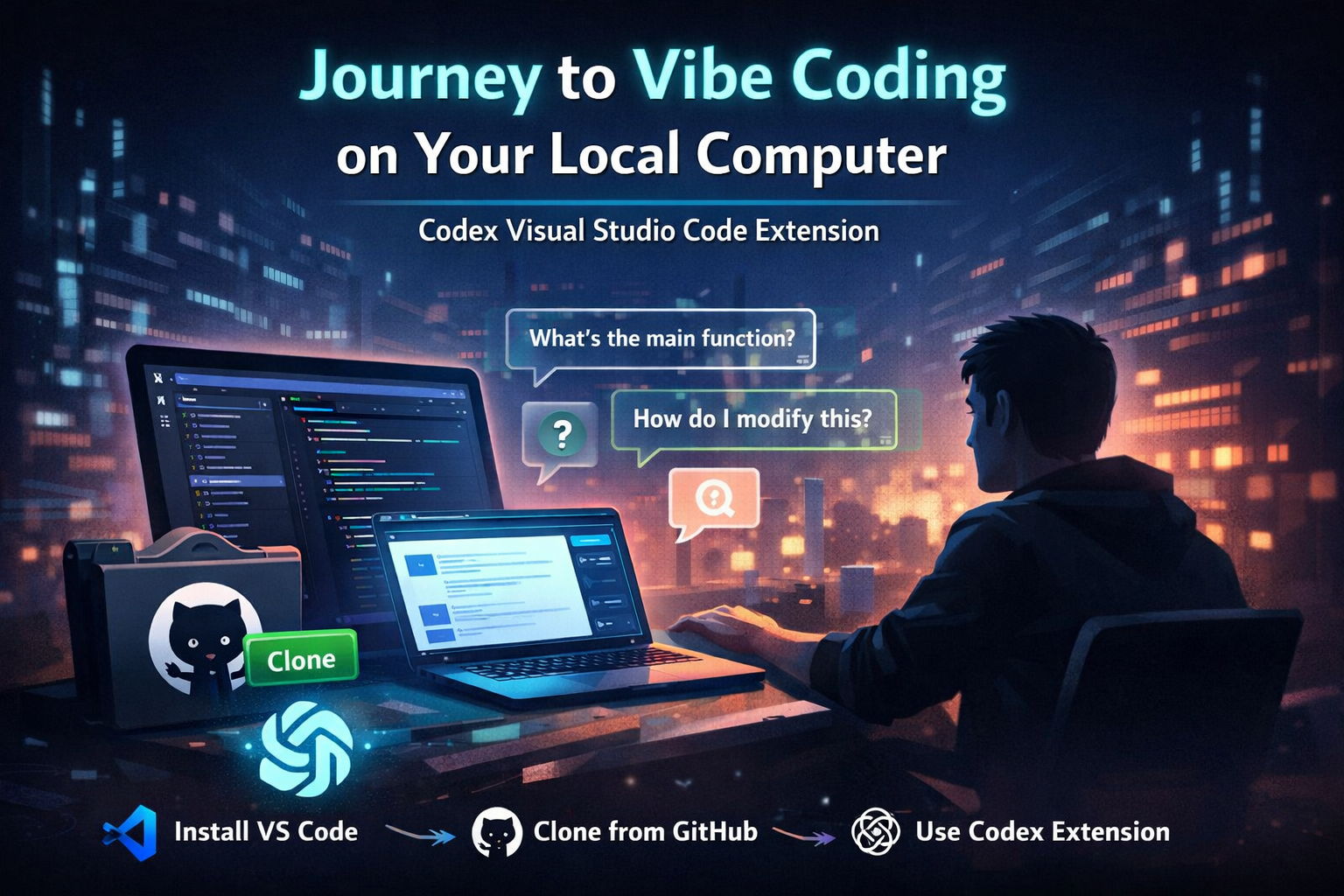
Journey to Vibe Coding on Your Local Computer: Codex Visual Studio Code Extension
Case Study: Engineering a Smarter, Faster QuickBooks Updater