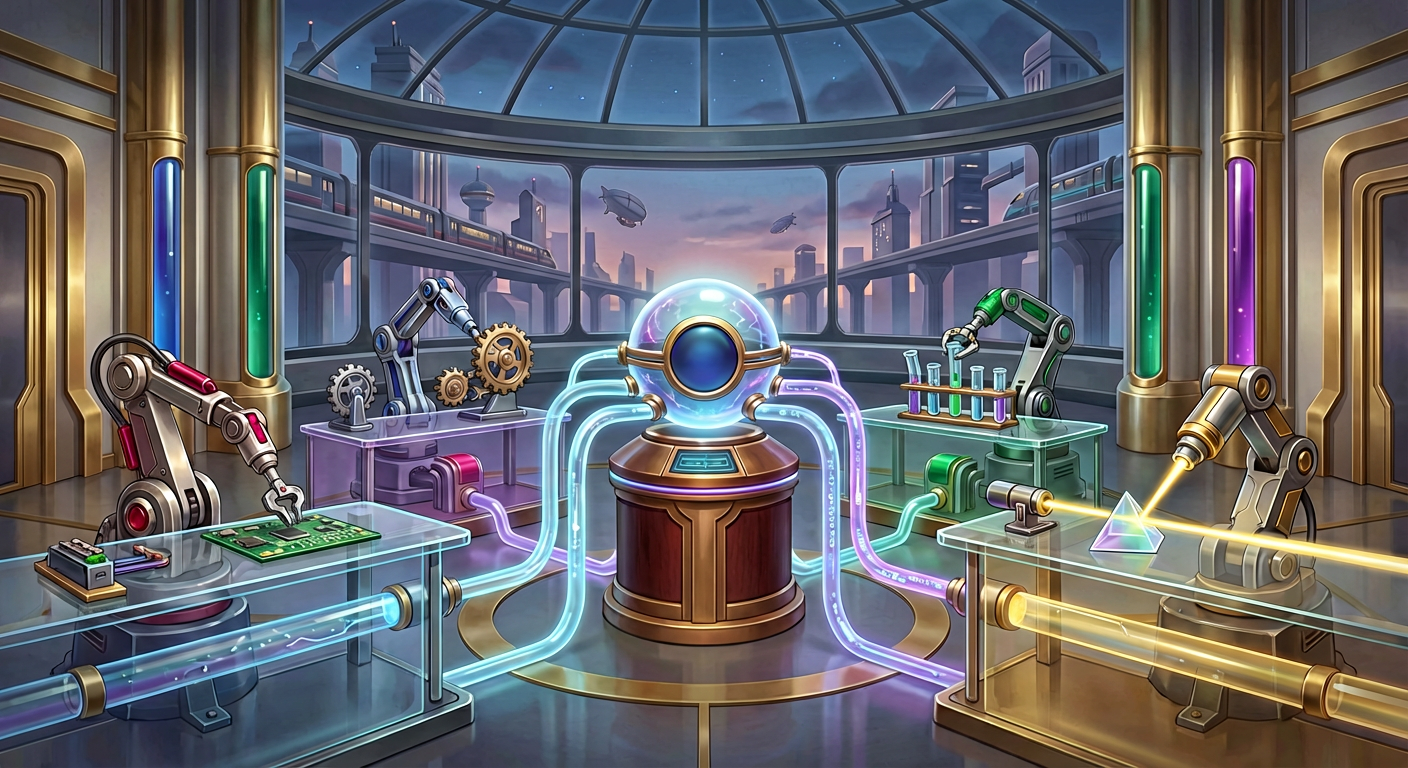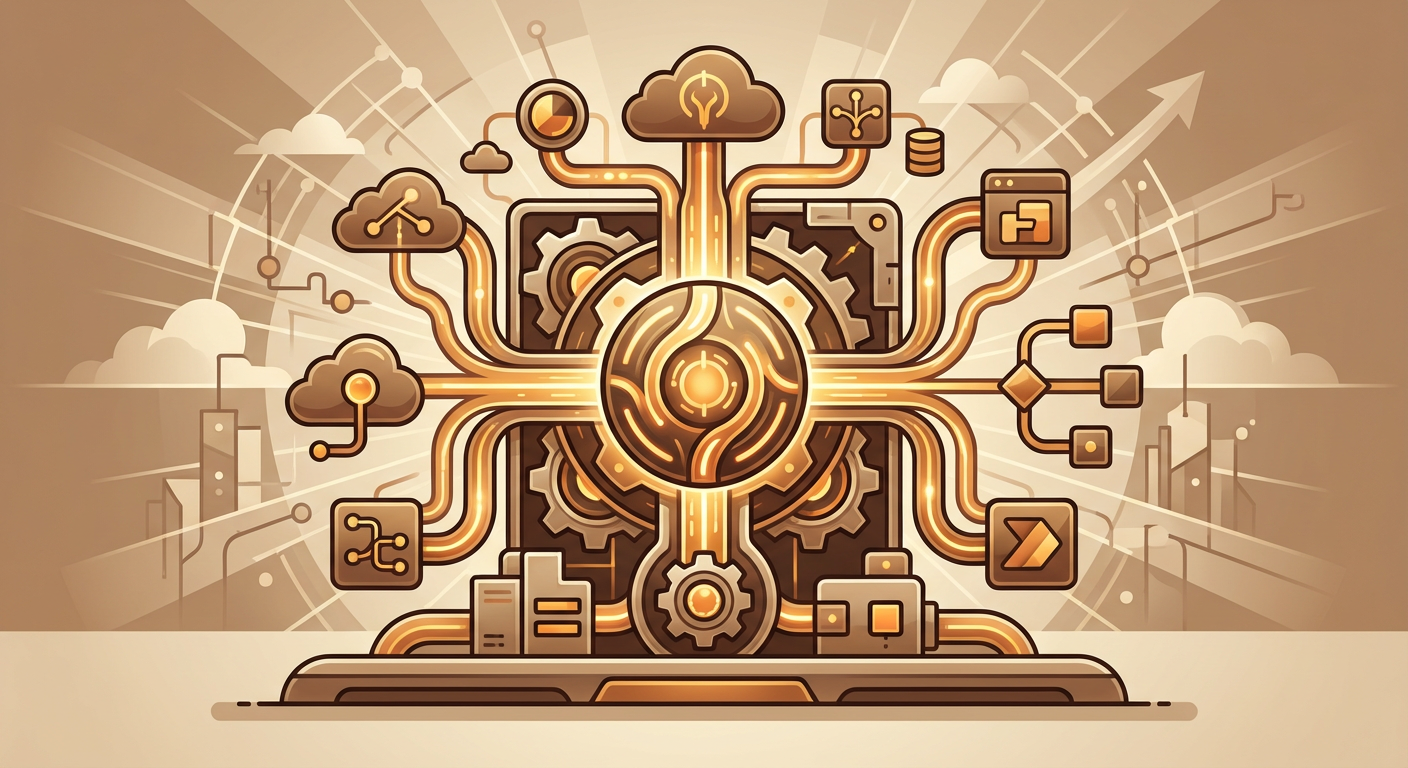
A multi-agent AI system differs fundamentally from the chatbots most businesses are currently using because it is designed to execute complete workflows rather than just answering single questions. Instead of relying on one model to handle everything, a multi-agent architecture employs specialized digital workers that research, plan, code, review, and finalize tasks before handing them off. At FlowDevs, we see this as the pivotal shift where artificial intelligence moves from a novelty that generates text to a core infrastructure that supports delivery.
Why Single Prompts Fail in Complex Operations
Most leaders realize that "AI for business" often stalls when the tasks become complex. Single-prompt interfaces are excellent for quick answers, but they struggle with operations that require context, memory, and multi-step execution. When you ask one model to do everything, it often hallucinates or loses the thread of the request.
Multi-agent AI solves this reliability problem by splitting the work into defined roles. Much like a human team, one agent gathers the necessary context, another acts on that information, and a third reviews the output. According to recent research by McKinsey, roughly 50 percent of current work activities are technically automated by adapting waiting technologies, yet success relies on this kind of structured orchestration. By compartmentalizing tasks, businesses can:
- Break down large project goals into manageable, smaller decisions
- Deploy specific tools for specific stages of the work
- Maintain structured, reviewable outputs
- Insert human approval steps where risk is highest
The Engine: GPT-5.4 and Codex CLI Explained
To understand the power of this approach, we have to look at the technology driving it. In our current workflows, we utilize GPT-5.4 paired with Codex CLI. While the version numbers may sound technical, the concept is straightforward.
Think of GPT-5.4 as the reasoning engine. It provides the high-level strategy and logic. However, reasoning alone cannot edit a file on your server or update a database. That is where Codex CLI comes in. It acts as the "hands" of the system, providing a working interface that allows the model to operate inside a real workspace.
This combination allows the system to:
- Read specific project files to understand existing context
- Search across entire repositories and internal documentation
- Create or edit files directly
- Run terminal commands to test its own work
- Verify results step-by-step instead of guessing
This is where workflow automation enables the system to bridge the gap between "having an idea" and "finishing the work." It allows FlowDevs to help you build systems that do not just suggest code or copy, but actually implement it.
What These Systems Can Actually Do
When you move beyond the chat interface, the capabilities of your digital infrastructure expand significantly. Here are five practical ways we are seeing this technology applied.
1. Turning Requests into Deliverables
A multi-agent workflow can take a vague request, such as "we need a new client portal," and convert it into tangible requirements. One agent creates the feature breakdown, another estimates the effort, and a third proposes the technical architecture.
2. Software Delivery and Engineering
For development teams, this is a productivity multiplier. Studies from GitHub suggest that developers using AI assistance can complete tasks over 50 percent faster. A multi-agent system can read a Jira ticket, inspect the code repository, propose a plan, edit the files, and run regression tests before a human ever reviews the pull request.
3. Content Production at Scale
Marketing operations often suffer from bottlenecks. In this model, one agent researches a topic, another drafts the article, a third adapts it for email or social media, and a final agent reviews it for SEO alignment and tone. This ensures consistency that a single generic assistant cannot match.
4. Intelligent Support Triage
Support teams can utilize agents to classify inbound requests, route them by urgency, and draft replies based on historical data. This reduces response times and ensures that human agents only step in for complex edge cases.
5. Full Stack Integration
The system excels when connected to the tools your team already uses. Whether it is docs, ticketing systems, CRMs, or databases, the agents act as the connective tissue between your disparate software platforms.
Example Prompts for Multi-Agent Workflows
Communicating with a system of agents is different from chatting with a bot. The prompts tend to be outcome-oriented rather than question-oriented. Here are examples of how you might direct a multi-agent system:
- "Read our website and propose three higher-converting homepage structures. Then, write the strongest version in a tone that is direct and modern."
- "Take this rough client request and turn it into a project scope, recommended stack, milestone plan, and fixed-price estimate draft."
- "Review this repository, find the most likely reason the build is failing, make the fix, and explain what changed in plain English."
- "Analyze our intake form submissions from the last 30 days, group them by need, identify common objections, and draft better qualification questions."
Frequently Asked Questions
Do multi-agent systems replace human employees?
No. These systems are designed to remove manual drag and "busy work." They handle the research, drafting, and initial execution, but human oversight is critical for strategy, final review, and complex decision-making.
Is this different from Microsoft Copilot?
Yes. While we are consultants for Copilot Studio and Power Automate, a custom multi-agent system often involves more granular control over specific proprietary tools, deeper integration into your codebase, or highly specific workflows that out-of-the-box assistants cannot handle yet.
How long does it take to build a custom workflow?
It depends on the complexity. A simple workflow for sorting emails might take a few days to prototype, while a fully integrated engineering agent system requires detailed mapping and testing. At FlowDevs, we focus on iterative builds that deliver value quickly.
Moving from Novelty to Infrastructure
Multi-agent AI is most valuable when it stops being a magic trick and starts handling real workflow steps with structure, tools, and accountability. This is the opportunity for businesses right now: to build a system that research, reasons, executes, and supports the way your team effectively works.
If you are ready to design a system that fits your specific process and drives real-world results, we are ready to help. Our team specializes in unlocking efficiency through custom application development and intelligent automation.
Book a consultation with FlowDevs to discuss how we can build a multi-agent workflow that powers your business.
Check out this post on Techne Blog.
A multi-agent AI system differs fundamentally from the chatbots most businesses are currently using because it is designed to execute complete workflows rather than just answering single questions. Instead of relying on one model to handle everything, a multi-agent architecture employs specialized digital workers that research, plan, code, review, and finalize tasks before handing them off. At FlowDevs, we see this as the pivotal shift where artificial intelligence moves from a novelty that generates text to a core infrastructure that supports delivery.
Why Single Prompts Fail in Complex Operations
Most leaders realize that "AI for business" often stalls when the tasks become complex. Single-prompt interfaces are excellent for quick answers, but they struggle with operations that require context, memory, and multi-step execution. When you ask one model to do everything, it often hallucinates or loses the thread of the request.
Multi-agent AI solves this reliability problem by splitting the work into defined roles. Much like a human team, one agent gathers the necessary context, another acts on that information, and a third reviews the output. According to recent research by McKinsey, roughly 50 percent of current work activities are technically automated by adapting waiting technologies, yet success relies on this kind of structured orchestration. By compartmentalizing tasks, businesses can:
- Break down large project goals into manageable, smaller decisions
- Deploy specific tools for specific stages of the work
- Maintain structured, reviewable outputs
- Insert human approval steps where risk is highest
The Engine: GPT-5.4 and Codex CLI Explained
To understand the power of this approach, we have to look at the technology driving it. In our current workflows, we utilize GPT-5.4 paired with Codex CLI. While the version numbers may sound technical, the concept is straightforward.
Think of GPT-5.4 as the reasoning engine. It provides the high-level strategy and logic. However, reasoning alone cannot edit a file on your server or update a database. That is where Codex CLI comes in. It acts as the "hands" of the system, providing a working interface that allows the model to operate inside a real workspace.
This combination allows the system to:
- Read specific project files to understand existing context
- Search across entire repositories and internal documentation
- Create or edit files directly
- Run terminal commands to test its own work
- Verify results step-by-step instead of guessing
This is where workflow automation enables the system to bridge the gap between "having an idea" and "finishing the work." It allows FlowDevs to help you build systems that do not just suggest code or copy, but actually implement it.
What These Systems Can Actually Do
When you move beyond the chat interface, the capabilities of your digital infrastructure expand significantly. Here are five practical ways we are seeing this technology applied.
1. Turning Requests into Deliverables
A multi-agent workflow can take a vague request, such as "we need a new client portal," and convert it into tangible requirements. One agent creates the feature breakdown, another estimates the effort, and a third proposes the technical architecture.
2. Software Delivery and Engineering
For development teams, this is a productivity multiplier. Studies from GitHub suggest that developers using AI assistance can complete tasks over 50 percent faster. A multi-agent system can read a Jira ticket, inspect the code repository, propose a plan, edit the files, and run regression tests before a human ever reviews the pull request.
3. Content Production at Scale
Marketing operations often suffer from bottlenecks. In this model, one agent researches a topic, another drafts the article, a third adapts it for email or social media, and a final agent reviews it for SEO alignment and tone. This ensures consistency that a single generic assistant cannot match.
4. Intelligent Support Triage
Support teams can utilize agents to classify inbound requests, route them by urgency, and draft replies based on historical data. This reduces response times and ensures that human agents only step in for complex edge cases.
5. Full Stack Integration
The system excels when connected to the tools your team already uses. Whether it is docs, ticketing systems, CRMs, or databases, the agents act as the connective tissue between your disparate software platforms.
Example Prompts for Multi-Agent Workflows
Communicating with a system of agents is different from chatting with a bot. The prompts tend to be outcome-oriented rather than question-oriented. Here are examples of how you might direct a multi-agent system:
- "Read our website and propose three higher-converting homepage structures. Then, write the strongest version in a tone that is direct and modern."
- "Take this rough client request and turn it into a project scope, recommended stack, milestone plan, and fixed-price estimate draft."
- "Review this repository, find the most likely reason the build is failing, make the fix, and explain what changed in plain English."
- "Analyze our intake form submissions from the last 30 days, group them by need, identify common objections, and draft better qualification questions."
Frequently Asked Questions
Do multi-agent systems replace human employees?
No. These systems are designed to remove manual drag and "busy work." They handle the research, drafting, and initial execution, but human oversight is critical for strategy, final review, and complex decision-making.
Is this different from Microsoft Copilot?
Yes. While we are consultants for Copilot Studio and Power Automate, a custom multi-agent system often involves more granular control over specific proprietary tools, deeper integration into your codebase, or highly specific workflows that out-of-the-box assistants cannot handle yet.
How long does it take to build a custom workflow?
It depends on the complexity. A simple workflow for sorting emails might take a few days to prototype, while a fully integrated engineering agent system requires detailed mapping and testing. At FlowDevs, we focus on iterative builds that deliver value quickly.
Moving from Novelty to Infrastructure
Multi-agent AI is most valuable when it stops being a magic trick and starts handling real workflow steps with structure, tools, and accountability. This is the opportunity for businesses right now: to build a system that research, reasons, executes, and supports the way your team effectively works.
If you are ready to design a system that fits your specific process and drives real-world results, we are ready to help. Our team specializes in unlocking efficiency through custom application development and intelligent automation.
Book a consultation with FlowDevs to discuss how we can build a multi-agent workflow that powers your business.
Check out this post on Techne Blog.