
Vibecoding is the fundamental shift in software engineering where developers transition from manual syntax entry to orchestrating AI agents through natural language prompts to generate complex code logic. At FlowDevs, we leverage this agentic workflow to move beyond the limitations of traditional coding, allowing us to build scalable cloud infrastructure and custom web applications faster and with greater precision. This evolution turns the developer into a director of intelligent systems rather than a mere typist of code.
The Rise of the Agentic Workflow
The daily reality of software development is changing rapidly. As the Prime Automator here at FlowDevs, my goal is not just to keep up with the digital landscape but to define how we navigate it. Gone are the days of spending hours manually typing out repetitive lines of C# boilerplate. Today, the focus is on "vibecoding."
It all starts with a prompt. Whether I am architecting the mobile framework for SupplyFlow or refining the backend for QB-Flow to automate QuickBooks Desktop updates, the workflow has fundamentally evolved. I am now orchestrating AI agents to bridge gaps across the Microsoft ecosystem. This approach, sometimes compared to "pair-programming with an AI," allows developers to express intent and let agents handle the technical details making complex system building feel natural again. While Azure, Power Automate, and .NET remain our foundational toolkit, agentic programming allowing us to streamline these complex systems efficiently.
The data supports this shift. According to research by GitHub, developers using AI assistants can complete tasks up to 55% faster than those who do not, fast-tracking development cycles significantly. Furthermore, Gartner predicts that by 2028, 75% of enterprise software engineers will use AI coding assistants, up from less than 10% in early 2023. This is not just a trend; it is the new standard for efficiency. Agentic AI, leveraging tools like those found in the Claude Code Complete Guide, allows for the design of logic at a high level, abstracting developers from the nitty-gritty of traditional development environments and enabling faster, safer builds.
Augmenting the Workforce at MnTech Connect
This agentic approach aligns perfectly with our philosophy: we streamline systems so businesses can focus on what actually matters. This is the exact concept I will be unpacking on stage at the MnTech Connect event this coming April. It is vital to understand that AI is not here to replace the engineer; instead, it is a collaborator that augments the entire workforce, allowing us to tackle higher-level strategic problems. This shift has changed careers, enabling "10x parallelism" in some instances and allowing developers to tackle dozens of fixes efficiently.
Balancing High-Tech with the Physical World
Building sustainable automation requires knowing when to disconnect. When screen fatigue sets in, the only way to maintain a high level of output is to step back and recharge. For me, that means spending time with my dogs, Oliver and Susie, who serve as constant reminders that there is a physical world outside of cloud architecture.
My evenings and weekends are dedicated to balancing the digital realm with tactile, hands-on pursuits:
- The MTG Grind: Tuning a new deck or running a Winston draft for Magic: The Gathering keeps the strategic mind sharp without looking at a monitor.
- Hardware and DIY: Firing up the Longer LK5 Pro 3D printer or soldering new ESP32 components helps me stay grounded in physical engineering.
- Adrenaline: Pushing the limits with FPV drone racing or hitting the slopes on a snowboard during the Minnesota winter provides a necessary reset.
Building for the Future Day by Day
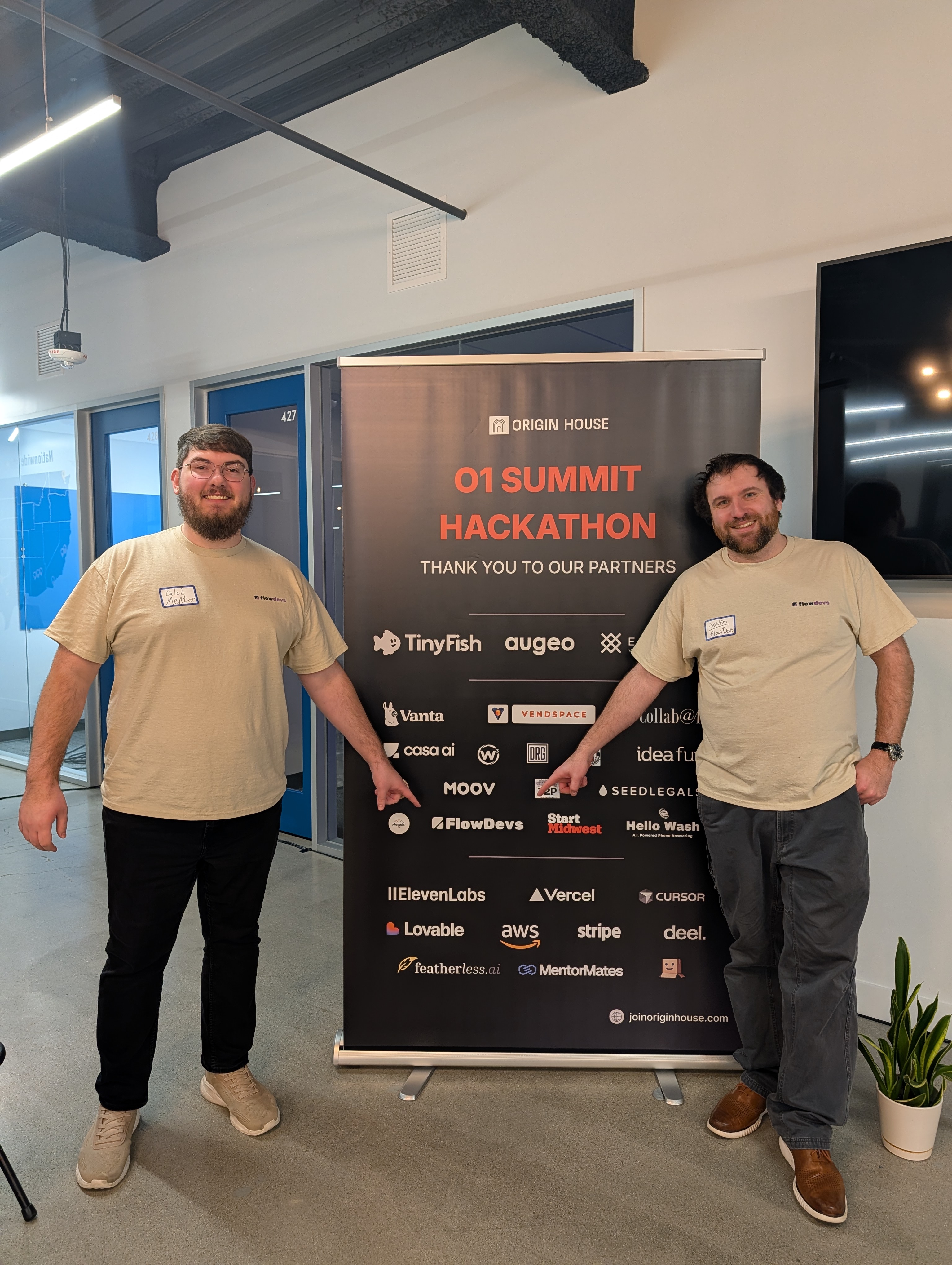
Every day is an iteration. We are scaling FlowDevs alongside Caleb, mapping out digital strategy for Techne.blog, and making steady progress on ventures like MN Purp. The goal is always to move the needle forward. We build automated systems to handle the noise so we have the bandwidth to live full, integrated lives. It is an ongoing process that happens day by day, prompt by prompt. For effective "vibecoding," it's often recommended to start simple, specify your goals clearly, and refine as you go, ensuring a reinforcing type of response from the AI agents to get the desired outcome.
If you are ready to explore how agentic workflows and intelligent automation can transform your business operations, let's talk. You can book a consultation directly through our bookings page.
Frequently Asked Questions
What is the difference between traditional coding and vibecoding?
Traditional coding involves manually writing syntax and logic line by line. Vibecoding, or prompt engineering, involves describing the desired outcome or logic in natural language to an AI agent, which then generates the code. This shifts the developer's role from writing code to reviewing, refining, and orchestrating architecture. Tools like Claude Code let developers abstract above the code level, managing files and creations without needing a traditional IDE and allowing for a focus on intent rather than syntax.
How does an agentic workflow improve business efficiency?
Agentic workflows use AI agents to handle repetitive, boilerplate tasks, such as writing standard database queries or setting up basic API endpoints. This frees up senior developers to focus on complex business logic, security, and system integration, leading to faster project delivery and reduced development costs. The ability to design logic at a high level and have AI agents fill in technical details means complex systems can be built more simply and with greater modularity and maintainability.
Will AI replace software developers?
No, AI is unlikely to replace developers in the near future. Instead, it acts as a force multiplier. While AI can generate code, it requires human oversight to ensure security, context, and alignment with business goals. The role of the developer is evolving into that of a systems architect who manages these AI tools. This agentic approach augments, rather than replaces, the workforce allowing for a focus on higher-level strategic problems.
What technologies does FlowDevs use for automation?
We specialize in the Microsoft ecosystem, utilizing Power Apps, Power Automate, and Copilot Studio to streamline workflows. We also leverage Azure cloud infrastructure and custom .NET development to build robust, scalable solutions tailored to specific business needs. Our approach aligns with modern agentic workflows, sometimes utilizing models like Claude Sonnet for efficient agentic tasks to integrate these complex systems.
Check out this post on Techne Blog.
Vibecoding is the fundamental shift in software engineering where developers transition from manual syntax entry to orchestrating AI agents through natural language prompts to generate complex code logic. At FlowDevs, we leverage this agentic workflow to move beyond the limitations of traditional coding, allowing us to build scalable cloud infrastructure and custom web applications faster and with greater precision. This evolution turns the developer into a director of intelligent systems rather than a mere typist of code.
The Rise of the Agentic Workflow
The daily reality of software development is changing rapidly. As the Prime Automator here at FlowDevs, my goal is not just to keep up with the digital landscape but to define how we navigate it. Gone are the days of spending hours manually typing out repetitive lines of C# boilerplate. Today, the focus is on "vibecoding."
It all starts with a prompt. Whether I am architecting the mobile framework for SupplyFlow or refining the backend for QB-Flow to automate QuickBooks Desktop updates, the workflow has fundamentally evolved. I am now orchestrating AI agents to bridge gaps across the Microsoft ecosystem. This approach, sometimes compared to "pair-programming with an AI," allows developers to express intent and let agents handle the technical details making complex system building feel natural again. While Azure, Power Automate, and .NET remain our foundational toolkit, agentic programming allowing us to streamline these complex systems efficiently.
The data supports this shift. According to research by GitHub, developers using AI assistants can complete tasks up to 55% faster than those who do not, fast-tracking development cycles significantly. Furthermore, Gartner predicts that by 2028, 75% of enterprise software engineers will use AI coding assistants, up from less than 10% in early 2023. This is not just a trend; it is the new standard for efficiency. Agentic AI, leveraging tools like those found in the Claude Code Complete Guide, allows for the design of logic at a high level, abstracting developers from the nitty-gritty of traditional development environments and enabling faster, safer builds.
Augmenting the Workforce at MnTech Connect
This agentic approach aligns perfectly with our philosophy: we streamline systems so businesses can focus on what actually matters. This is the exact concept I will be unpacking on stage at the MnTech Connect event this coming April. It is vital to understand that AI is not here to replace the engineer; instead, it is a collaborator that augments the entire workforce, allowing us to tackle higher-level strategic problems. This shift has changed careers, enabling "10x parallelism" in some instances and allowing developers to tackle dozens of fixes efficiently.
Balancing High-Tech with the Physical World
Building sustainable automation requires knowing when to disconnect. When screen fatigue sets in, the only way to maintain a high level of output is to step back and recharge. For me, that means spending time with my dogs, Oliver and Susie, who serve as constant reminders that there is a physical world outside of cloud architecture.
My evenings and weekends are dedicated to balancing the digital realm with tactile, hands-on pursuits:
- The MTG Grind: Tuning a new deck or running a Winston draft for Magic: The Gathering keeps the strategic mind sharp without looking at a monitor.
- Hardware and DIY: Firing up the Longer LK5 Pro 3D printer or soldering new ESP32 components helps me stay grounded in physical engineering.
- Adrenaline: Pushing the limits with FPV drone racing or hitting the slopes on a snowboard during the Minnesota winter provides a necessary reset.
Building for the Future Day by Day
Every day is an iteration. We are scaling FlowDevs alongside Caleb, mapping out digital strategy for Techne.blog, and making steady progress on ventures like MN Purp. The goal is always to move the needle forward. We build automated systems to handle the noise so we have the bandwidth to live full, integrated lives. It is an ongoing process that happens day by day, prompt by prompt. For effective "vibecoding," it's often recommended to start simple, specify your goals clearly, and refine as you go, ensuring a reinforcing type of response from the AI agents to get the desired outcome.
If you are ready to explore how agentic workflows and intelligent automation can transform your business operations, let's talk. You can book a consultation directly through our bookings page.
Frequently Asked Questions
What is the difference between traditional coding and vibecoding?
Traditional coding involves manually writing syntax and logic line by line. Vibecoding, or prompt engineering, involves describing the desired outcome or logic in natural language to an AI agent, which then generates the code. This shifts the developer's role from writing code to reviewing, refining, and orchestrating architecture. Tools like Claude Code let developers abstract above the code level, managing files and creations without needing a traditional IDE and allowing for a focus on intent rather than syntax.
How does an agentic workflow improve business efficiency?
Agentic workflows use AI agents to handle repetitive, boilerplate tasks, such as writing standard database queries or setting up basic API endpoints. This frees up senior developers to focus on complex business logic, security, and system integration, leading to faster project delivery and reduced development costs. The ability to design logic at a high level and have AI agents fill in technical details means complex systems can be built more simply and with greater modularity and maintainability.
Will AI replace software developers?
No, AI is unlikely to replace developers in the near future. Instead, it acts as a force multiplier. While AI can generate code, it requires human oversight to ensure security, context, and alignment with business goals. The role of the developer is evolving into that of a systems architect who manages these AI tools. This agentic approach augments, rather than replaces, the workforce allowing for a focus on higher-level strategic problems.
What technologies does FlowDevs use for automation?
We specialize in the Microsoft ecosystem, utilizing Power Apps, Power Automate, and Copilot Studio to streamline workflows. We also leverage Azure cloud infrastructure and custom .NET development to build robust, scalable solutions tailored to specific business needs. Our approach aligns with modern agentic workflows, sometimes utilizing models like Claude Sonnet for efficient agentic tasks to integrate these complex systems.
Check out this post on Techne Blog.