The software industry is currently obsessed with "vibecoding." If you have spent any time on Twitter or LinkedIn recently, you have likely seen the demos: a developer opens a chat window, types a vague request, and watches in awe as an AI spits out a functional C# class or a PowerShell script in ten seconds. It feels like magic. It feels like the future.
But here is the hard truth that passionate technologists need to accept: generating syntax is no longer the job. The ability to produce lines of code at lightning speed does not equate to building robust software. In fact, if you rely on AI to write your code without a rock-solid system design, you aren't really building software at all.
You are building a house of cards.
The New Bottleneck is Architecture
For decades, the primary bottleneck in software development was the physical act of writing code. Developers had to memorize syntax, look up libraries, and debug typos. AI has effectively removed that barrier. However, it has exposed a much more critical and difficult bottleneck: software architecture.
While some argue that "the AI is the bottleneck now, not architecture," and that they've built entire architectures around Claude code, this perspective often overlooks the bigger picture. AI is incredible at solving micro-problems. If you need a function to sort a list or an API endpoint to fetch user data, code generation tools will deliver perfection. But AI struggles with the macro-picture. It does not inherently understand how that sorting function impacts your database load during peak hours, or how that API endpoint fits into your broader security model.
When you let the "vibes" drive the development process, you end up with a codebase that works in isolation but fails in integration. Without strict architectural oversight, you get:
- Inconsistent coding patterns that make maintenance a nightmare.
- Security vulnerabilities introduced by copy-pasting generated code blindly. As noted by Apiiro, AI-generated code requires human oversight, and large language models can replicate insecure patterns, amplifying existing flaws at an alarming pace.
- Data flows that resemble spaghetti logical rather than streamlined pipelines.
Defining the Guardrails Before the Prompt
To succeed in this new era of AI-assisted development, we have to flip our approach. We cannot let the prompt dictate the build. Instead, we must define the system design before a single prompt is written.
This means establishing clear design patterns, security guardrails, and data flow diagrams upfront. You need to know exactly how your cloud infrastructure will scale and how your custom web applications will talk to your database triggers. The role of the senior developer has shifted from "lead writer" to "editor-in-chief" and "architect." As Stephan Schmidt, a CTO coach, emphasizes, architecture must be AI-ready for real productivity gains. He also challenges the common belief that vibe coding will democratize software development, explaining that you need to be a strong developer to prompt effectively.
If you skip this step, your AI tools will happily generate a legacy codebase from day one. It will look modern on the surface, but underneath, it will be an unmaintainable mess that collapses under the weight of its own lack of structure within six months.
Orchestration Over Generation
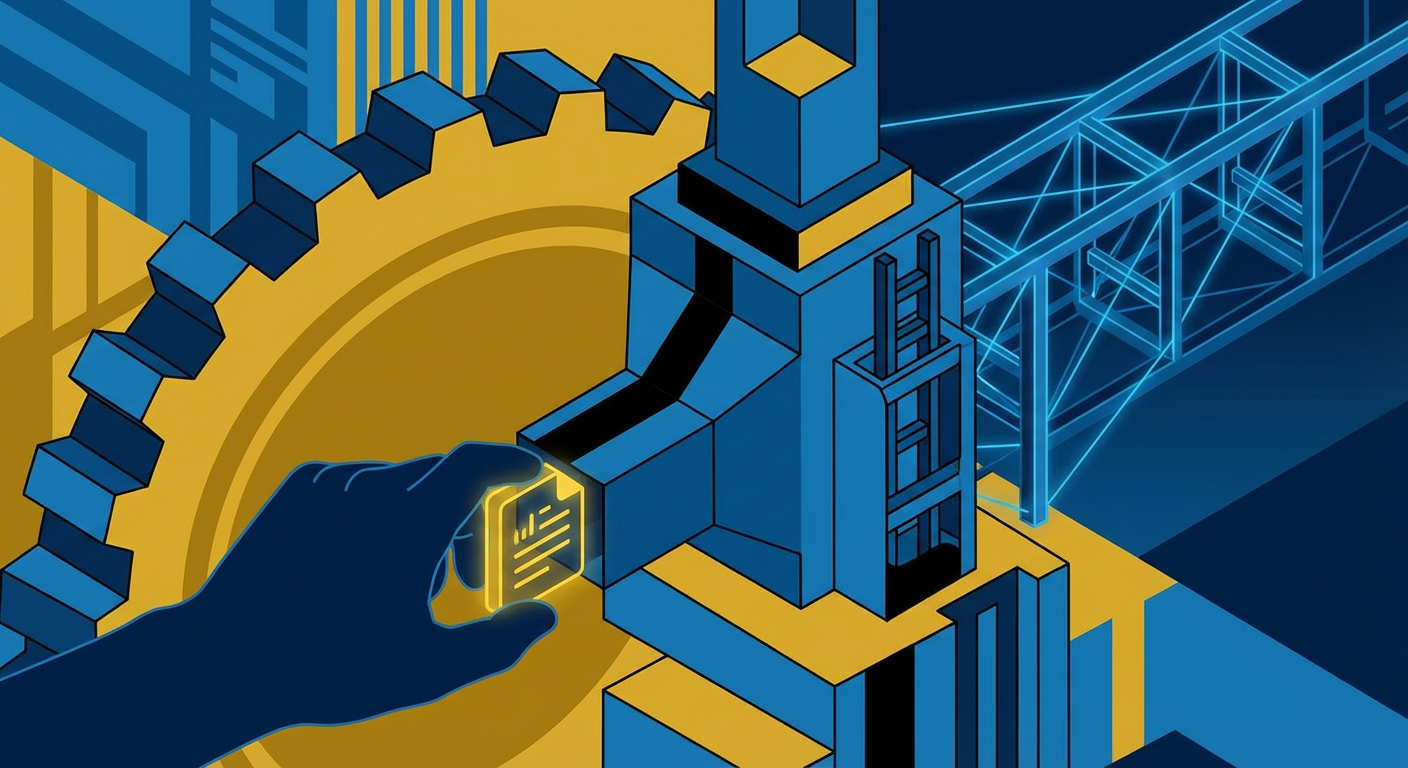
At FlowDevs, we look at AI in software development differently. We do not just use AI to generate code; we use it to fill in the specific blocks of a carefully designed blueprint. We orchestrate systems.
Our focus is on intelligent automation and unlocking efficiency. Whether we are consulting on Power Apps, configuring Power Automate flows, or deploying Copilot Studio, we lock down the architecture first. We ensure that when the AI goes to work, it is building on a concrete foundation, not guessing at the structural integrity of your business logic.
We believe that AI creates the blocks, but humans must draw the blueprints. By combining deep technical strategy with the speed of AI code generation, we deliver solutions that are not just fast to build, but resilient enough to power modern business.
Let’s Talk Architecture
The transition from manual coding to AI-assisted development is the biggest shift we have seen in years, but you do not have to navigate it blindly. I will be diving deep into the exact architecture of production-ready AI workflows next month on stage at MnTech Connect.
If you cannot wait until then, or if you are worried your current project might already be suffering from "vibecoding" fatigue, let’s take a look under the hood together. You can book an Architecture Audit with us today to see how your current codebase holds up against modern standards.
Visit our bookings page at https://bookings.flowdevs.io and let’s ensure your technical vision is built to last.
Check out this post on Techne Blog.
The software industry is currently obsessed with "vibecoding." If you have spent any time on Twitter or LinkedIn recently, you have likely seen the demos: a developer opens a chat window, types a vague request, and watches in awe as an AI spits out a functional C# class or a PowerShell script in ten seconds. It feels like magic. It feels like the future.
But here is the hard truth that passionate technologists need to accept: generating syntax is no longer the job. The ability to produce lines of code at lightning speed does not equate to building robust software. In fact, if you rely on AI to write your code without a rock-solid system design, you aren't really building software at all.
You are building a house of cards.
The New Bottleneck is Architecture
For decades, the primary bottleneck in software development was the physical act of writing code. Developers had to memorize syntax, look up libraries, and debug typos. AI has effectively removed that barrier. However, it has exposed a much more critical and difficult bottleneck: software architecture.
While some argue that "the AI is the bottleneck now, not architecture," and that they've built entire architectures around Claude code, this perspective often overlooks the bigger picture. AI is incredible at solving micro-problems. If you need a function to sort a list or an API endpoint to fetch user data, code generation tools will deliver perfection. But AI struggles with the macro-picture. It does not inherently understand how that sorting function impacts your database load during peak hours, or how that API endpoint fits into your broader security model.
When you let the "vibes" drive the development process, you end up with a codebase that works in isolation but fails in integration. Without strict architectural oversight, you get:
- Inconsistent coding patterns that make maintenance a nightmare.
- Security vulnerabilities introduced by copy-pasting generated code blindly. As noted by Apiiro, AI-generated code requires human oversight, and large language models can replicate insecure patterns, amplifying existing flaws at an alarming pace.
- Data flows that resemble spaghetti logical rather than streamlined pipelines.
Defining the Guardrails Before the Prompt
To succeed in this new era of AI-assisted development, we have to flip our approach. We cannot let the prompt dictate the build. Instead, we must define the system design before a single prompt is written.
This means establishing clear design patterns, security guardrails, and data flow diagrams upfront. You need to know exactly how your cloud infrastructure will scale and how your custom web applications will talk to your database triggers. The role of the senior developer has shifted from "lead writer" to "editor-in-chief" and "architect." As Stephan Schmidt, a CTO coach, emphasizes, architecture must be AI-ready for real productivity gains. He also challenges the common belief that vibe coding will democratize software development, explaining that you need to be a strong developer to prompt effectively.
If you skip this step, your AI tools will happily generate a legacy codebase from day one. It will look modern on the surface, but underneath, it will be an unmaintainable mess that collapses under the weight of its own lack of structure within six months.
Orchestration Over Generation
At FlowDevs, we look at AI in software development differently. We do not just use AI to generate code; we use it to fill in the specific blocks of a carefully designed blueprint. We orchestrate systems.
Our focus is on intelligent automation and unlocking efficiency. Whether we are consulting on Power Apps, configuring Power Automate flows, or deploying Copilot Studio, we lock down the architecture first. We ensure that when the AI goes to work, it is building on a concrete foundation, not guessing at the structural integrity of your business logic.
We believe that AI creates the blocks, but humans must draw the blueprints. By combining deep technical strategy with the speed of AI code generation, we deliver solutions that are not just fast to build, but resilient enough to power modern business.
Let’s Talk Architecture
The transition from manual coding to AI-assisted development is the biggest shift we have seen in years, but you do not have to navigate it blindly. I will be diving deep into the exact architecture of production-ready AI workflows next month on stage at MnTech Connect.
If you cannot wait until then, or if you are worried your current project might already be suffering from "vibecoding" fatigue, let’s take a look under the hood together. You can book an Architecture Audit with us today to see how your current codebase holds up against modern standards.
Visit our bookings page at https://bookings.flowdevs.io and let’s ensure your technical vision is built to last.
Check out this post on Techne Blog.