
.jpg)
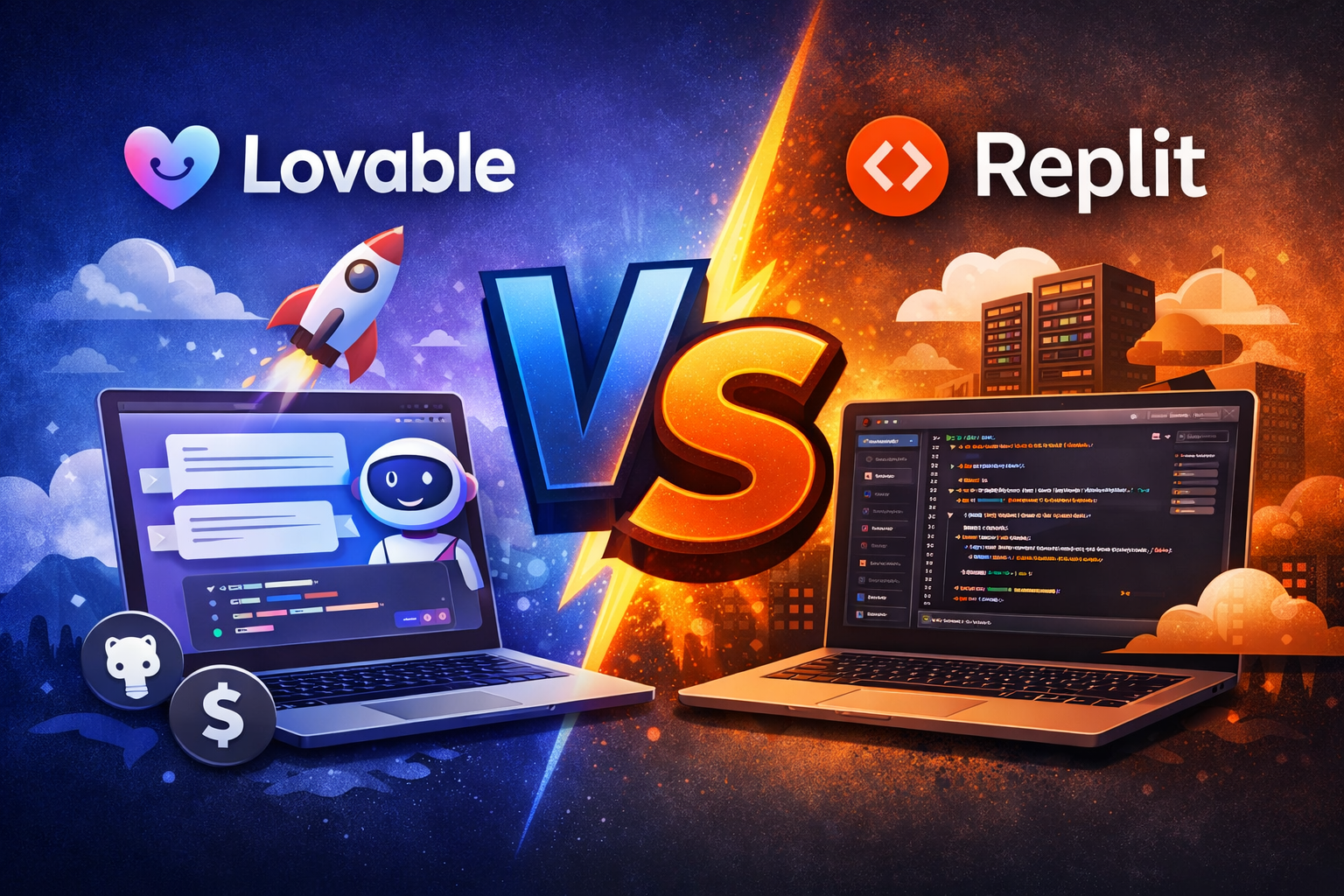
“Vibe coding” has officially grown up.
A year ago, AI coding tools mostly meant autocomplete and the occasional “write me a function.” Today, tools like
Lovable and Replit can take a plain-English prompt and turn it into a working app sometimes with deployment, auth, and payments baked in.
They feel similar on the surface, but they’re optimized for different workflows. Here’s how to choose.
What is Lovable?
Lovable positions itself as an AI app and website builder that turns your idea into “production-ready software” through a chat interface.
A few Lovable traits that matter in practice:
· Chat-first building: You describe what you want; it updates the UI and code as you iterate.
· Publishing + domains: Paid tiers include features like custom domains and removing platform branding.
· Portability via GitHub sync: Connect a project to GitHub so devs can take over locally or deploy elsewhere.
· Product integrations: Designed around “appproduct” workflows auth, databases, and payments.
Helpful links: Lovable Pricing • Lovable Docs: GitHub • Lovable Docs: Stripe
What is Replit?
Replit is a cloud development platform: an online workspace for writing, running, and deploying code. Its standout capability for many people today is Replit Agent, which can build apps from natural-language prompts and keep extending them as you request changes.
A few Replit traits that matter in practice:
· Agent + IDE workflow: Start with the agent, then drop into a full workspace when you want more control.
· Deployment options: “Publishing” deploys a running instance of your app, with multiple deployment types.
· Team controls: Team plans emphasize collaboration controls like roles and centralized billing.
Helpful links: Replit Docs: Deployments • Replit Pricing
Lovable vs Replit: the differences that actually matter
1) Default workflow: chat-first vs build-first
· Lovable: “Talk to build.” Best when the chat is the primary interface and code is an artifact you can export later.
· Replit: “Build with an agent + a full workspace.” Best when you expect to iterate like a developer (run/debug/tune) even if the agent scaffolds most of the app.
2) Portability and escape hatches
· Lovable: GitHub connection is a first-class feature useful if you want to hand the repo to engineers or deploy on your own infra.
· Replit: Strong end-to-end workflow inside Replit: code, run, collaborate, deploy, and host from the same platform.
3) Deployment model
· Lovable: Straightforward publishing story with custom domains on paid tiers.
· Replit: Multiple deployment types and a deployment dashboard-oriented workflow.
Which should you pick?
Pick Lovable if…
· You want a chat-first product builder that can iterate quickly from prompts.
· You care about GitHub sync/export so developers can take over later or deploy elsewhere.
· You prefer a simpler, product-builder experience over a full dev environment.
Pick Replit if…
· You want an agent that can scaffold quickly, plus a full dev workspace for debugging and development.
· You want a mature publish/deploy system with multiple hosting modes.
· Your team wants per-user collaboration controls as part of a developer platform.
Bottom line
If you’re trying to turn an idea into a product-shaped app fast (and you like the option of handing a repo to developers later), Lovable is a great fit.
If you want an AI that can build from prompts and you also want to live in a real dev workflow and deploy via a flexible built-in publishing system, Replit is hard to beat.
“Vibe coding” has officially grown up.
A year ago, AI coding tools mostly meant autocomplete and the occasional “write me a function.” Today, tools like
Lovable and Replit can take a plain-English prompt and turn it into a working app sometimes with deployment, auth, and payments baked in.
They feel similar on the surface, but they’re optimized for different workflows. Here’s how to choose.
What is Lovable?
Lovable positions itself as an AI app and website builder that turns your idea into “production-ready software” through a chat interface.
A few Lovable traits that matter in practice:
· Chat-first building: You describe what you want; it updates the UI and code as you iterate.
· Publishing + domains: Paid tiers include features like custom domains and removing platform branding.
· Portability via GitHub sync: Connect a project to GitHub so devs can take over locally or deploy elsewhere.
· Product integrations: Designed around “appproduct” workflows auth, databases, and payments.
Helpful links: Lovable Pricing • Lovable Docs: GitHub • Lovable Docs: Stripe
What is Replit?
Replit is a cloud development platform: an online workspace for writing, running, and deploying code. Its standout capability for many people today is Replit Agent, which can build apps from natural-language prompts and keep extending them as you request changes.
A few Replit traits that matter in practice:
· Agent + IDE workflow: Start with the agent, then drop into a full workspace when you want more control.
· Deployment options: “Publishing” deploys a running instance of your app, with multiple deployment types.
· Team controls: Team plans emphasize collaboration controls like roles and centralized billing.
Helpful links: Replit Docs: Deployments • Replit Pricing
Lovable vs Replit: the differences that actually matter
1) Default workflow: chat-first vs build-first
· Lovable: “Talk to build.” Best when the chat is the primary interface and code is an artifact you can export later.
· Replit: “Build with an agent + a full workspace.” Best when you expect to iterate like a developer (run/debug/tune) even if the agent scaffolds most of the app.
2) Portability and escape hatches
· Lovable: GitHub connection is a first-class feature useful if you want to hand the repo to engineers or deploy on your own infra.
· Replit: Strong end-to-end workflow inside Replit: code, run, collaborate, deploy, and host from the same platform.
3) Deployment model
· Lovable: Straightforward publishing story with custom domains on paid tiers.
· Replit: Multiple deployment types and a deployment dashboard-oriented workflow.
Which should you pick?
Pick Lovable if…
· You want a chat-first product builder that can iterate quickly from prompts.
· You care about GitHub sync/export so developers can take over later or deploy elsewhere.
· You prefer a simpler, product-builder experience over a full dev environment.
Pick Replit if…
· You want an agent that can scaffold quickly, plus a full dev workspace for debugging and development.
· You want a mature publish/deploy system with multiple hosting modes.
· Your team wants per-user collaboration controls as part of a developer platform.
Bottom line
If you’re trying to turn an idea into a product-shaped app fast (and you like the option of handing a repo to developers later), Lovable is a great fit.
If you want an AI that can build from prompts and you also want to live in a real dev workflow and deploy via a flexible built-in publishing system, Replit is hard to beat.
Related Blog Posts

The Flow of Vibe Coding on Lovable
.png)