.jpg)
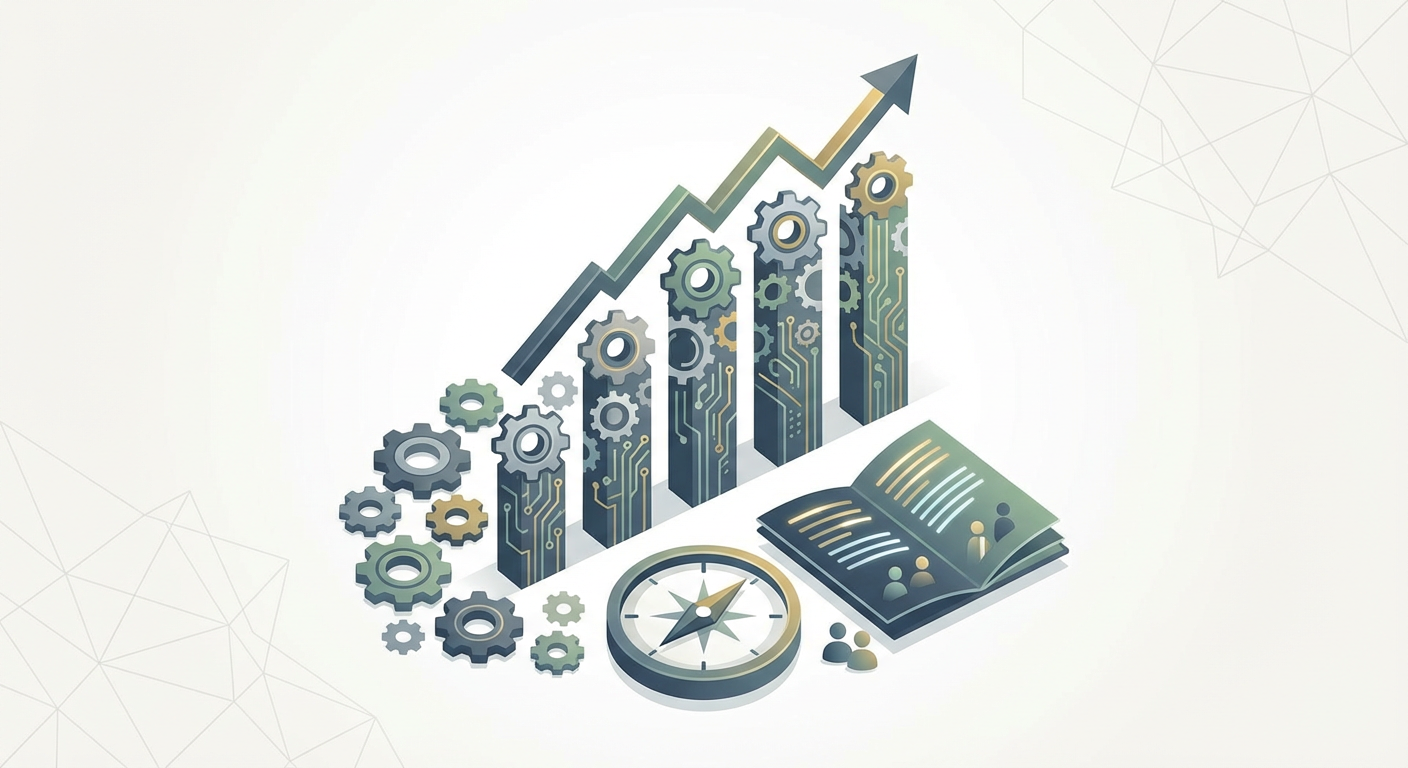
Most SMB automation projects fail for a boring reason. It is not because the technology is too difficult or the budget is too tight. They fail because automation is treated like a tool you buy, rather than a way you run your business.
When leaders say they need automation, what they usually mean is that they are tired of manual steps. They are exhausted by copy-pasting data, managing spreadsheets that pretend to be systems, and having their team members act like human APIs. However, real return on investment (ROI) does not come from simply adding another application to your tech stack.
ROI comes from treating automation as a leadership challenge involving operational design and iterative delivery. Automation is not a project to be completed. It is an operating system to be installed.
The Real Cost of "Humans as Middleware"
In many small and mid-sized businesses, the most distinct bottleneck is the reliance on humans to move data from one system to another. We call this "humans as middleware."
When your best people spend hours manually re-entering invoice data from an email into QuickBooks, or updating a CRM based on a spreadsheet, the cost is higher than just their hourly wage. You face three distinct penalties:
- Opportunity Cost: Your talent is focused on low-value data entry rather than high-value strategic work or customer service.
- Error Rate: Humans make mistakes when tired or distracted. Data inconsistencies create downstream chaos.
- Speed: Manual processes can only move as fast as a person can type. Automated workflows move at the speed of code.
Why Tool-First Projects Fail
The instinct for many leaders is to shop for a solution. They look for a SaaS product that promises to solve the inefficiency. The problem is that technology cannot fix a broken process. If you automate a chaotic, undefined process, you simply speed up the chaos.
Many AI initiatives, for example, fail not due to a lack of technological prowess, but because of inadequate project management and a failure to align AI efforts with strategic business objectives. A recent MIT report highlighted that while companies are investing billions in GenAI, only 5% are seeing measurable returns, often because value isn't clearly defined from a leadership perspective, leading to initiatives that are "wrappers or science projects" rather than business solutions Source 4. Successful automations happen when you design the operation first. This requires mapping the "as-is" workflow, identifying the friction points, and defining the "to-be" state before writing a single line of code.
Furthermore, the biggest misconception about AI implementation costs is that software licenses represent the bulk of your investment. In reality, software licenses often account for just 30-50% of total implementation costs for SMEs. The remaining 50-70% goes toward what most businesses fail to anticipate: integration work, data preparation, training, and ongoing operations Source 3. This underscores the need for a holistic, process-first approach.
The Three Decisions Leaders Must Make
To shift from buying tools to designing operations, leadership must make and enforce three critical decisions.
1. Establish One Source of Truth
If the same customer, invoice, or task exists in three different places, you do not have a process. You have a rumor. Leaders must decide which system holds the master record. Any other system is merely a reflection of that truth. Without this decision, automation scripts will fail because they lack reliable data triggers. Financial automation platforms, for instance, emphasize the importance of accurate data analysis for confident decision-making Source 2. This accuracy starts with a single source of truth.
2. Ensure the Workflow Matches Reality
Automation only works when it mirrors how decisions are actually made. This includes the messiness of real business, such as exceptions, approvals, and rejections. If you design a "happy path" workflow that ignores the reality of how your team handles edge cases, the team will bypass the automation and return to spreadsheets.
3. Commit to a Delivery Cadence That Builds Trust
SMBs do not need 9-month digital transformation roadmaps. By the time the project is delivered, the business needs will have changed. Instead, you need a working Minimum Viable Product (MVP) fast. The goal is to speed up iterative improvements on a predictable rhythm. This agile approach is critical for the "AI Project Playbook," emphasizing measurable results and aligning efforts with strategic business objectives Source 1. The best ROI in automation often comes from "narrow, embedded, back-office automations that integrate cleanly and show results fast" Source 4.
MVP in Weeks: What "Fast" Looks Like
At FlowDevs, we believe the sweet spot for SMBs is the Microsoft Power Platform combined with pragmatic process design. This allows for rapid development that integrates seamlessly with the tools you likely already use, such as Office 365, Dynamics, or simple SQL databases.
A successful engagement looks like this:
- Map the Process: document the current steps.
- Build the MVP: create a functional automation for the core workflow within weeks, not months.
- Train the Team: ensure adoption by showing users how the tool removes their drudgery.
- Optimize: continuously improve the system based on user feedback.
What to Automate First: A Scoring Model
If you are unsure where to start, look for the "low-hanging fruit." We recommend scoring potential workflows based on three criteria:
- Frequency: Does this task happen daily or weekly?
- Standardization: are the rules for completing the task clear and logic-based?
- Pain Level: do your employees hate doing it?
A classic starting point is the Intake to Approval to Handoff workflow. Whether it is a new client onboarding, an expense report, or a contract review, these processes usually burn hours of time every week in email back-and-forth. By measuring the current time spent and comparing it to the automated result, the ROI becomes undeniable.
Change Management and ROI
The point of this transition is not to replace people. It is to move people up the value chain. When software handles the repeatable work, humans are freed to handle judgment calls, strategy, and relationships.
The math is straightforward. If a custom Power Automate flow saves a team member 5 hours per week, that is 260 hours per year. Multiply that by your average billable rate or internal cost, and the payback period for a targeted automation project is often measured in months. Articulating quantifiable benefits, such as cost savings or improved efficiency, is crucial for justifying the investment Source 1. For successful implementations, every pound invested can deliver approximately £3.70 in return Source 3, making the business case robust.
Start Your Operating System Upgrade
Automation is no longer just for enterprise giants. With tools like Power Apps and Copilot Studio, SMBs can build intelligent systems that rival the efficiency of the Fortune 500. But it starts with leadership deciding to stop copy-pasting and start designing.
If you are ready to stop managing "rumors" and start managing a data-driven system, we can help you identify your highest-impact workflows.
Let's build your MVP. Book a discovery call with FlowDevs today: https://bookings.flowdevs.io
Most SMB automation projects fail for a boring reason. It is not because the technology is too difficult or the budget is too tight. They fail because automation is treated like a tool you buy, rather than a way you run your business.
When leaders say they need automation, what they usually mean is that they are tired of manual steps. They are exhausted by copy-pasting data, managing spreadsheets that pretend to be systems, and having their team members act like human APIs. However, real return on investment (ROI) does not come from simply adding another application to your tech stack.
ROI comes from treating automation as a leadership challenge involving operational design and iterative delivery. Automation is not a project to be completed. It is an operating system to be installed.
The Real Cost of "Humans as Middleware"
In many small and mid-sized businesses, the most distinct bottleneck is the reliance on humans to move data from one system to another. We call this "humans as middleware."
When your best people spend hours manually re-entering invoice data from an email into QuickBooks, or updating a CRM based on a spreadsheet, the cost is higher than just their hourly wage. You face three distinct penalties:
- Opportunity Cost: Your talent is focused on low-value data entry rather than high-value strategic work or customer service.
- Error Rate: Humans make mistakes when tired or distracted. Data inconsistencies create downstream chaos.
- Speed: Manual processes can only move as fast as a person can type. Automated workflows move at the speed of code.
Why Tool-First Projects Fail
The instinct for many leaders is to shop for a solution. They look for a SaaS product that promises to solve the inefficiency. The problem is that technology cannot fix a broken process. If you automate a chaotic, undefined process, you simply speed up the chaos.
Many AI initiatives, for example, fail not due to a lack of technological prowess, but because of inadequate project management and a failure to align AI efforts with strategic business objectives. A recent MIT report highlighted that while companies are investing billions in GenAI, only 5% are seeing measurable returns, often because value isn't clearly defined from a leadership perspective, leading to initiatives that are "wrappers or science projects" rather than business solutions Source 4. Successful automations happen when you design the operation first. This requires mapping the "as-is" workflow, identifying the friction points, and defining the "to-be" state before writing a single line of code.
Furthermore, the biggest misconception about AI implementation costs is that software licenses represent the bulk of your investment. In reality, software licenses often account for just 30-50% of total implementation costs for SMEs. The remaining 50-70% goes toward what most businesses fail to anticipate: integration work, data preparation, training, and ongoing operations Source 3. This underscores the need for a holistic, process-first approach.
The Three Decisions Leaders Must Make
To shift from buying tools to designing operations, leadership must make and enforce three critical decisions.
1. Establish One Source of Truth
If the same customer, invoice, or task exists in three different places, you do not have a process. You have a rumor. Leaders must decide which system holds the master record. Any other system is merely a reflection of that truth. Without this decision, automation scripts will fail because they lack reliable data triggers. Financial automation platforms, for instance, emphasize the importance of accurate data analysis for confident decision-making Source 2. This accuracy starts with a single source of truth.
2. Ensure the Workflow Matches Reality
Automation only works when it mirrors how decisions are actually made. This includes the messiness of real business, such as exceptions, approvals, and rejections. If you design a "happy path" workflow that ignores the reality of how your team handles edge cases, the team will bypass the automation and return to spreadsheets.
3. Commit to a Delivery Cadence That Builds Trust
SMBs do not need 9-month digital transformation roadmaps. By the time the project is delivered, the business needs will have changed. Instead, you need a working Minimum Viable Product (MVP) fast. The goal is to speed up iterative improvements on a predictable rhythm. This agile approach is critical for the "AI Project Playbook," emphasizing measurable results and aligning efforts with strategic business objectives Source 1. The best ROI in automation often comes from "narrow, embedded, back-office automations that integrate cleanly and show results fast" Source 4.
MVP in Weeks: What "Fast" Looks Like
At FlowDevs, we believe the sweet spot for SMBs is the Microsoft Power Platform combined with pragmatic process design. This allows for rapid development that integrates seamlessly with the tools you likely already use, such as Office 365, Dynamics, or simple SQL databases.
A successful engagement looks like this:
- Map the Process: document the current steps.
- Build the MVP: create a functional automation for the core workflow within weeks, not months.
- Train the Team: ensure adoption by showing users how the tool removes their drudgery.
- Optimize: continuously improve the system based on user feedback.
What to Automate First: A Scoring Model
If you are unsure where to start, look for the "low-hanging fruit." We recommend scoring potential workflows based on three criteria:
- Frequency: Does this task happen daily or weekly?
- Standardization: are the rules for completing the task clear and logic-based?
- Pain Level: do your employees hate doing it?
A classic starting point is the Intake to Approval to Handoff workflow. Whether it is a new client onboarding, an expense report, or a contract review, these processes usually burn hours of time every week in email back-and-forth. By measuring the current time spent and comparing it to the automated result, the ROI becomes undeniable.
Change Management and ROI
The point of this transition is not to replace people. It is to move people up the value chain. When software handles the repeatable work, humans are freed to handle judgment calls, strategy, and relationships.
The math is straightforward. If a custom Power Automate flow saves a team member 5 hours per week, that is 260 hours per year. Multiply that by your average billable rate or internal cost, and the payback period for a targeted automation project is often measured in months. Articulating quantifiable benefits, such as cost savings or improved efficiency, is crucial for justifying the investment Source 1. For successful implementations, every pound invested can deliver approximately £3.70 in return Source 3, making the business case robust.
Start Your Operating System Upgrade
Automation is no longer just for enterprise giants. With tools like Power Apps and Copilot Studio, SMBs can build intelligent systems that rival the efficiency of the Fortune 500. But it starts with leadership deciding to stop copy-pasting and start designing.
If you are ready to stop managing "rumors" and start managing a data-driven system, we can help you identify your highest-impact workflows.
Let's build your MVP. Book a discovery call with FlowDevs today: https://bookings.flowdevs.io
Related Blog Posts
From Chatbots to Agents: Building Autonomous Workflows with Microsoft Copilot Studio

Beyond the Hype: Building AI Agents That Actually Do Work