
Minnesota’s startup scene is building real momentum, and Origin House’s recent 24-hour AI hackathon made that impossible to miss.
Over the course of a single weekend, founders, engineers, designers, and students came together to turn ambitious ideas into working AI products aimed at real-world problems. The result was more than a pitch competition. It was a strong signal that the Minneapolis and broader Minnesota builder community is growing fast, and building with serious intent. At FlowDevs, we support this growth by offering custom web application development to help local startups scale their digital ideas into robust platforms.
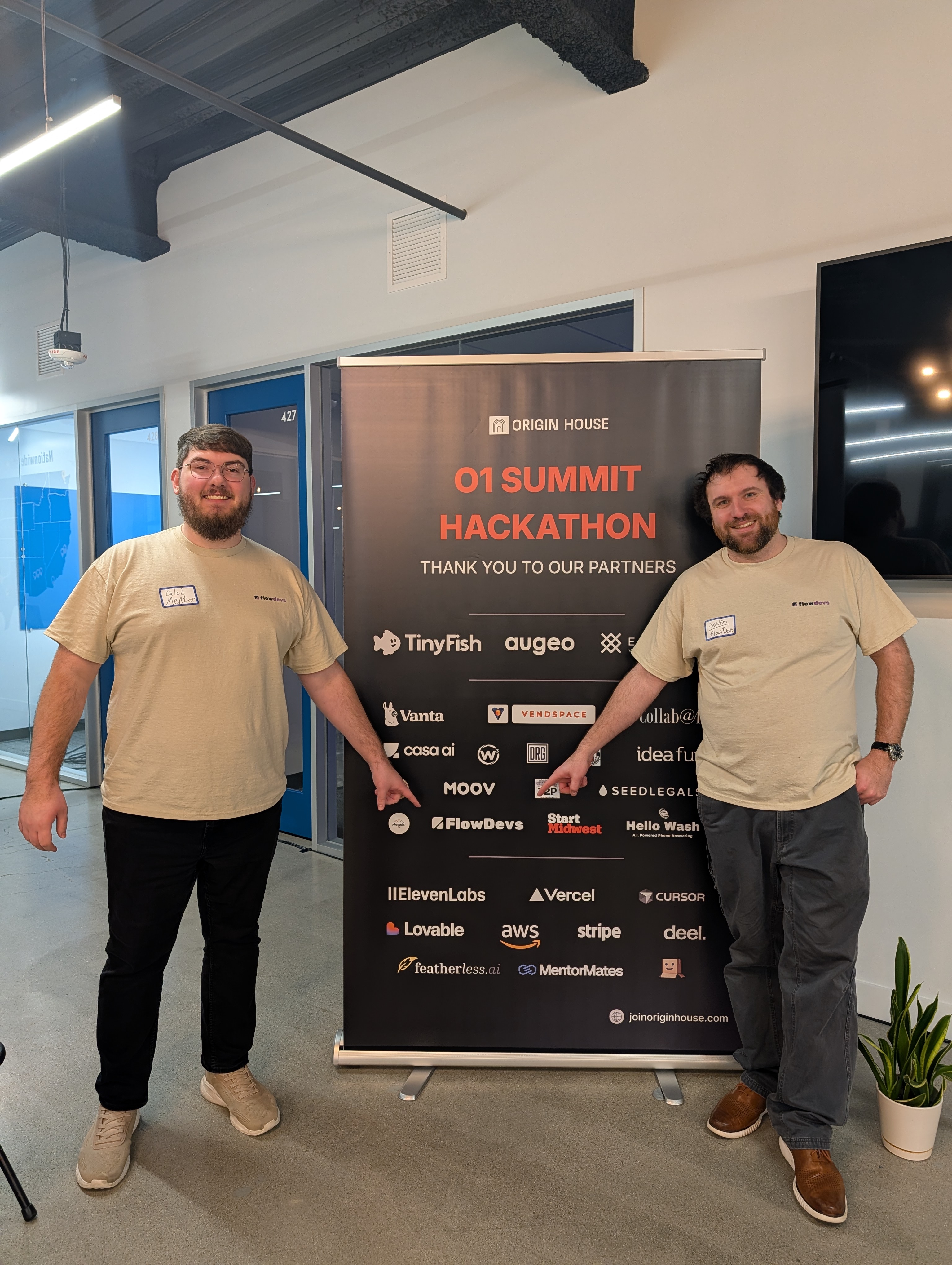
At FlowDevs, we were proud to sponsor and mentor throughout the event. Justin Trantham and Caleb Anderson joined the weekend to help teams sharpen ideas, work through technical roadblocks, and push projects forward from kickoff all the way to the final presentations. As Power Apps consultants, we love seeing how low-code and pro-code tools can combine to accelerate development milestones. What stood out most was the quality of execution and the strength of the local community forming around these events.
Why This Hackathon Mattered
Too often, startup innovation gets framed as something that only happens on the coasts. This event told a different story. Minnesota builders showed they can move quickly, solve meaningful problems, and ship ideas with real commercial and social potential. In just 24 hours, teams built products spanning secondhand retail, fleet operations, accessibility technology, and surgical safety.
That kind of range matters. It shows that Minnesota is not just producing talent. It is producing founders and operators who know how to apply AI through intelligent automation services to practical, scalable opportunities. The event also reinforced something equally important: startup ecosystems grow when communities give builders room to try, ship, and connect. That is exactly what Origin House created.
Standout Minnesota-Focused Innovations
Stylography: AI Search for Local Thrift Stores
One of the most locally grounded ideas of the weekend was Stylography, an AI-powered platform that helps users upload a photo of an outfit and find similar pieces from thrift stores. The team is launching locally and tapping into a strong secondhand retail ecosystem, with more than 1,300 thrift stores across Minnesota. One of the most memorable moments came when the team took a live call from a local thrift store owner during the presentation. The response was immediate: this is the kind of product small businesses could genuinely use to compete.
Nova: Smarter Fueling for Twin Cities Fleets
Nova tackled a costly operational problem for service businesses: fuel waste. Their AI predictive routing app helps fleet drivers determine the best time and location to refuel based on pricing patterns and route efficiency. What made the idea especially compelling was the team’s local-first strategy. They are launching in the Twin Cities, using the area’s strong concentration of HVAC and service fleets as an ideal proving ground. This type of efficiency often requires Power Automate automation to connect various data sources and logistics triggers seamlessly.
Manifest: Affordable Communication Support for ALS Patients
Manifest was one of the most meaningful projects presented over the weekend. Built by a team that includes an undergraduate researcher from the University of Minnesota, Manifest is a non-invasive accessibility device designed to help ALS patients communicate more easily. It was a powerful reminder that fast-moving technical communities are not just good for startups. They are also capable of producing solutions with real human impact, similar to how we deploy Copilot Studio solutions to make complex information more accessible through conversational AI.
Oliver Bay Inc.: Multi-Agent Surgical Surveillance
Oliver Bay Inc. built a real-time AI monitoring system for operating rooms. Using a multi-agent architecture, the platform analyzes surgical video footage and helps identify potential mistakes or contamination risks in real time. What makes this especially exciting in Minnesota is the local healthcare ecosystem surrounding it. To handle such data-intensive workloads, these types of innovative tools require a scalable cloud infrastructure to ensure reliability and performance during critical medical procedures.
Celebrating the Winning Team
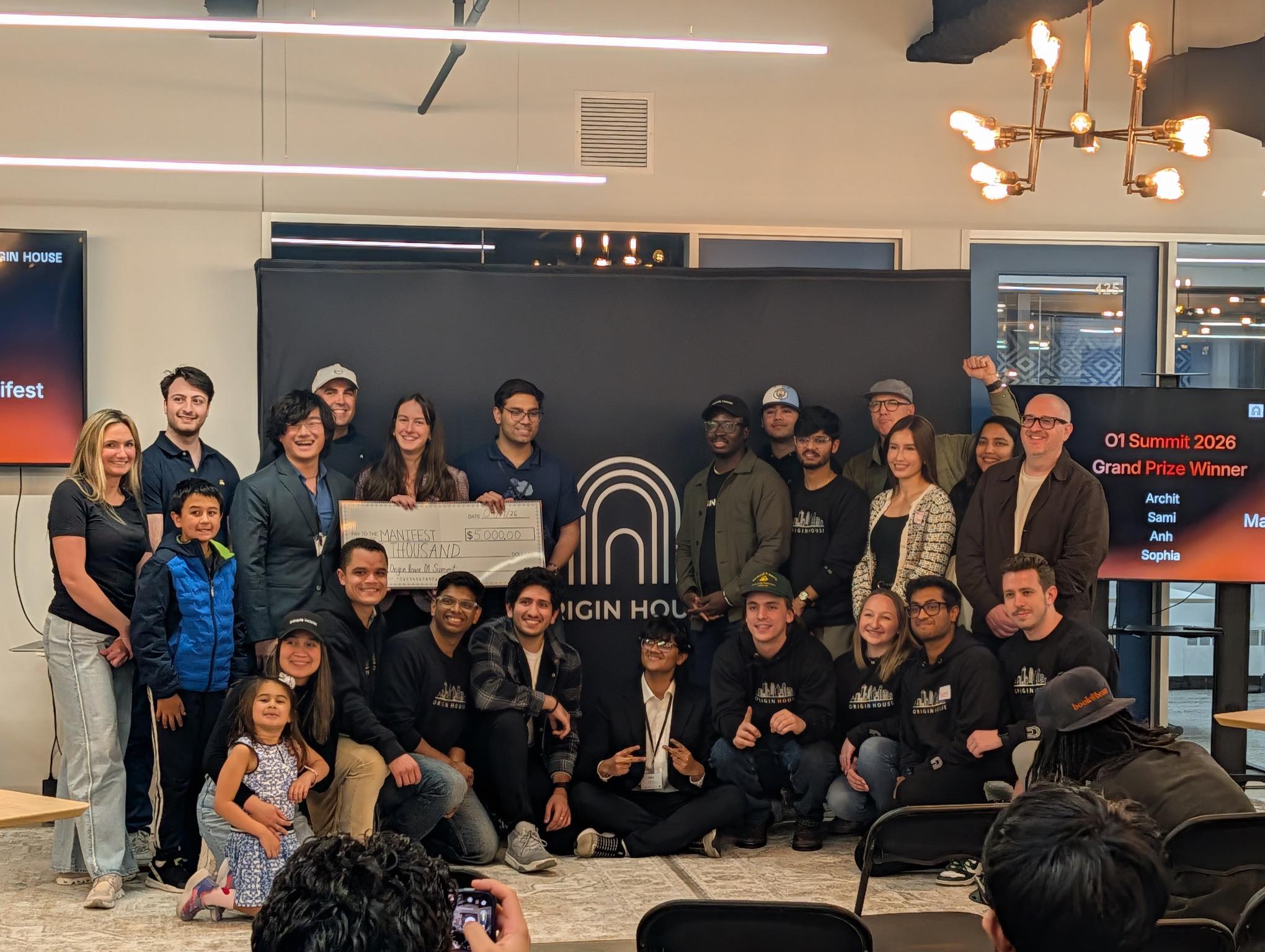
A huge congratulations to the winning team:
Watching them build under pressure and deliver at the end of the event was one of the highlights of the weekend. Their win reflected exactly what this hackathon was about: strong ideas, sharp execution, and local builders stepping up in a big way.
The People and Brands Behind the Event
A big part of what made the weekend special was the number of local leaders, sponsors, and partners who showed up to support builders.
Thank you to Srinivas Preetham Addepalli and the entire Origin House team for organizing the event and creating the kind of environment that helps startup communities grow.
Thank you as well to EXPANSIVE for providing the space that gave teams room to build, collaborate, and present.
And thank you to the sponsors and tool providers who equipped builders with what they needed to move fast, including TinyFish – Enterprise Infrastructure for AI Web Agents, Lovable, Vercel: Build and deploy the best web experiences with the AI Cloud, Cloud Computing Services - Amazon Web Services (AWS), Stripe | Financial Infrastructure to Grow Your Revenue, and others.
What This Says About Minnesota Startups
This event distributed $10,000 in prizes along with cloud credits and technical support from sponsors, but the bigger takeaway was the proof point. Minnesota has the talent to build viable AI products, the community to support emerging founders, and the momentum to keep producing more ambitious technical work.
At FlowDevs, we were grateful to sponsor and mentor, but the bigger story is the ecosystem itself. This weekend showed what can happen when builders are given urgency, community, and a real platform to create. Minnesota innovation is not just on the horizon. It is already here. book a strategy call
Closing CTA
If you’re building in Minnesota and want help turning an idea, prototype, or internal tool into something production-ready, FlowDevs is always excited to connect with founders, operators, and local teams who are building real things. Whether you need expert Power Apps consultants or deep expertise in custom web application development, we are here to help. If this hackathon was any indication, there is a lot more coming from Minnesota.
Check out this post on Techne Blog.
Minnesota’s startup scene is building real momentum, and Origin House’s recent 24-hour AI hackathon made that impossible to miss.
Over the course of a single weekend, founders, engineers, designers, and students came together to turn ambitious ideas into working AI products aimed at real-world problems. The result was more than a pitch competition. It was a strong signal that the Minneapolis and broader Minnesota builder community is growing fast, and building with serious intent. At FlowDevs, we support this growth by offering custom web application development to help local startups scale their digital ideas into robust platforms.
At FlowDevs, we were proud to sponsor and mentor throughout the event. Justin Trantham and Caleb Anderson joined the weekend to help teams sharpen ideas, work through technical roadblocks, and push projects forward from kickoff all the way to the final presentations. As Power Apps consultants, we love seeing how low-code and pro-code tools can combine to accelerate development milestones. What stood out most was the quality of execution and the strength of the local community forming around these events.
Why This Hackathon Mattered
Too often, startup innovation gets framed as something that only happens on the coasts. This event told a different story. Minnesota builders showed they can move quickly, solve meaningful problems, and ship ideas with real commercial and social potential. In just 24 hours, teams built products spanning secondhand retail, fleet operations, accessibility technology, and surgical safety.
That kind of range matters. It shows that Minnesota is not just producing talent. It is producing founders and operators who know how to apply AI through intelligent automation services to practical, scalable opportunities. The event also reinforced something equally important: startup ecosystems grow when communities give builders room to try, ship, and connect. That is exactly what Origin House created.
Standout Minnesota-Focused Innovations
Stylography: AI Search for Local Thrift Stores
One of the most locally grounded ideas of the weekend was Stylography, an AI-powered platform that helps users upload a photo of an outfit and find similar pieces from thrift stores. The team is launching locally and tapping into a strong secondhand retail ecosystem, with more than 1,300 thrift stores across Minnesota. One of the most memorable moments came when the team took a live call from a local thrift store owner during the presentation. The response was immediate: this is the kind of product small businesses could genuinely use to compete.
Nova: Smarter Fueling for Twin Cities Fleets
Nova tackled a costly operational problem for service businesses: fuel waste. Their AI predictive routing app helps fleet drivers determine the best time and location to refuel based on pricing patterns and route efficiency. What made the idea especially compelling was the team’s local-first strategy. They are launching in the Twin Cities, using the area’s strong concentration of HVAC and service fleets as an ideal proving ground. This type of efficiency often requires Power Automate automation to connect various data sources and logistics triggers seamlessly.
Manifest: Affordable Communication Support for ALS Patients
Manifest was one of the most meaningful projects presented over the weekend. Built by a team that includes an undergraduate researcher from the University of Minnesota, Manifest is a non-invasive accessibility device designed to help ALS patients communicate more easily. It was a powerful reminder that fast-moving technical communities are not just good for startups. They are also capable of producing solutions with real human impact, similar to how we deploy Copilot Studio solutions to make complex information more accessible through conversational AI.
Oliver Bay Inc.: Multi-Agent Surgical Surveillance
Oliver Bay Inc. built a real-time AI monitoring system for operating rooms. Using a multi-agent architecture, the platform analyzes surgical video footage and helps identify potential mistakes or contamination risks in real time. What makes this especially exciting in Minnesota is the local healthcare ecosystem surrounding it. To handle such data-intensive workloads, these types of innovative tools require a scalable cloud infrastructure to ensure reliability and performance during critical medical procedures.
Celebrating the Winning Team
A huge congratulations to the winning team:
Watching them build under pressure and deliver at the end of the event was one of the highlights of the weekend. Their win reflected exactly what this hackathon was about: strong ideas, sharp execution, and local builders stepping up in a big way.
The People and Brands Behind the Event
A big part of what made the weekend special was the number of local leaders, sponsors, and partners who showed up to support builders.
Thank you to Srinivas Preetham Addepalli and the entire Origin House team for organizing the event and creating the kind of environment that helps startup communities grow.
Thank you as well to EXPANSIVE for providing the space that gave teams room to build, collaborate, and present.
And thank you to the sponsors and tool providers who equipped builders with what they needed to move fast, including TinyFish – Enterprise Infrastructure for AI Web Agents, Lovable, Vercel: Build and deploy the best web experiences with the AI Cloud, Cloud Computing Services - Amazon Web Services (AWS), Stripe | Financial Infrastructure to Grow Your Revenue, and others.
What This Says About Minnesota Startups
This event distributed $10,000 in prizes along with cloud credits and technical support from sponsors, but the bigger takeaway was the proof point. Minnesota has the talent to build viable AI products, the community to support emerging founders, and the momentum to keep producing more ambitious technical work.
At FlowDevs, we were grateful to sponsor and mentor, but the bigger story is the ecosystem itself. This weekend showed what can happen when builders are given urgency, community, and a real platform to create. Minnesota innovation is not just on the horizon. It is already here. book a strategy call
Closing CTA
If you’re building in Minnesota and want help turning an idea, prototype, or internal tool into something production-ready, FlowDevs is always excited to connect with founders, operators, and local teams who are building real things. Whether you need expert Power Apps consultants or deep expertise in custom web application development, we are here to help. If this hackathon was any indication, there is a lot more coming from Minnesota.
Check out this post on Techne Blog.