

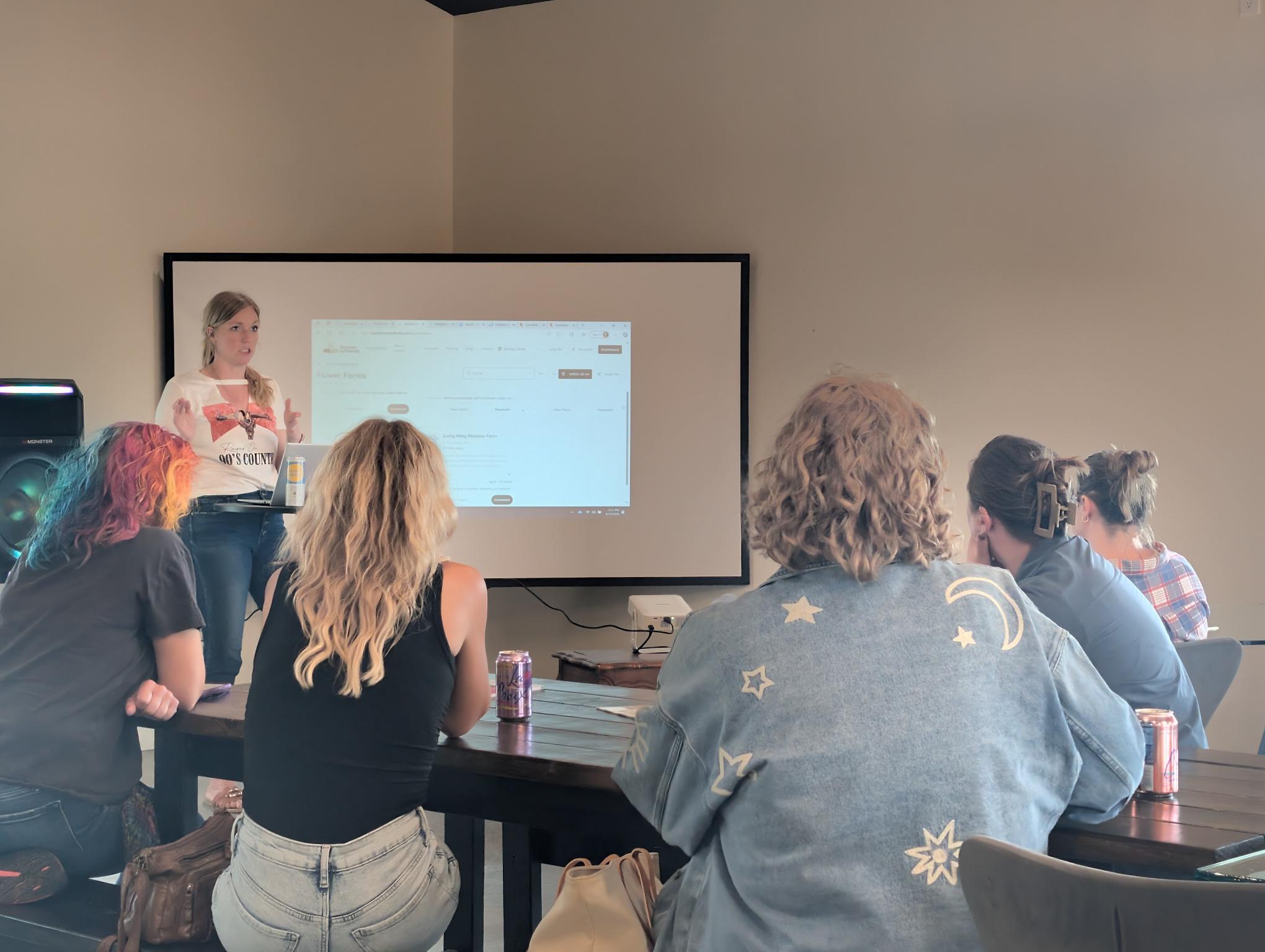
On June 23, 2026, a vibrant community of local flower farmers and florists gathered to experience the future of the local floral industry.
Led by Dr. Liz Fiedler Mergen, the visionary behind Farmers to Florists, the event gave attendees a hands-on look at a digital marketplace designed to make it easier for flower farmers and florists to plan, communicate, buy, sell, and grow together.
At its core, Farmers to Florists helps local growers share upcoming flower availability while giving florists the tools they need to plan recipes, build wishlists, estimate costs, and source wholesale flowers from nearby farms.
A Local Flower Marketplace Built for the Trade
For many flower farmers and florists, the current process of buying and selling local flowers is still surprisingly manual. Availability is often shared through scattered text messages, social media updates, email threads, and spreadsheets. Florists may not know what flowers are coming into season, and farmers may not have an easy way to forecast demand before harvest.
Farmers to Florists was created to solve that problem.
During the event, Liz walked attendees through the platform’s core features and showed how it can save both farmers and florists hours of administrative work.
One of the standout tools was the Recipe Planner, built specifically for florists who need to organize floral designs for weddings, events, and custom orders. The Recipe Planner helps florists calculate bouquet ingredients, track stem counts, estimate costs, and understand exactly what they need to order before an event.
For the farmers in the room, the spotlight was on the Crop Planner. This tool allows growers to log harvests, add season notes, set expected harvest dates, and share upcoming inventory directly with florists. Instead of waiting for last-minute messages or managing availability through spreadsheets, farmers can give florists a clearer view of what is growing, what is coming soon, and what may be available for future orders.
Together, these tools help replace fragmented communication with one centralized platform built specifically for the local floral supply chain.
Supporting the Farmers and Florists Behind the Platform
While the focus of the event was entirely on the floral community, our team at FlowDevs was grateful to be in the room in a supporting role.
FlowDevs partnered with Liz to help bring the Farmers to Florists platform to life. At the event, our team was there to answer technical questions, listen to user feedback, and support attendees as they created profiles and explored the platform.
It was especially valuable to watch farmers and florists interact with the software in real time. Their questions, ideas, and feedback helped highlight what matters most to the people who will use this platform every day.
Attendees discussed features like turning wishlists into actual orders, improving visibility between growers and buyers, and making it easier for florists to plan around local availability. These conversations are exactly what make a platform like Farmers to Florists stronger. The product is not being built in isolation; it is being shaped by the farmers and florists it was designed to serve.
Built to Move as Fast as the Community Needs
One of the biggest advantages of the Farmers to Florists platform is that it can continue evolving quickly based on real user feedback.
Because the platform was built with a modern, agile development process, new ideas do not have to sit untouched for months. When users identify a workflow that could be simpler, a feature that could save time, or a better way to connect farmers and florists, those insights can be translated into product improvements quickly.
That matters in a seasonal industry.
Flower farmers are constantly planning around weather, harvest windows, crop yields, and availability. Florists are balancing client expectations, event timelines, budgets, and design needs. A useful software platform for this industry has to be flexible, responsive, and grounded in the realities of the work.
Farmers to Florists was built with that reality in mind.
Building a Stronger Local Floral Network
Beyond the software demo, the event created space for meaningful connection.
Farmers and florists shared honest conversations about wholesale pricing, crop planning, seasonal availability, order timing, and the challenges of building stronger local flower supply chains. These discussions showed that the platform is about more than technology. It is about helping a community work together more clearly and efficiently.
To help jumpstart that local network, Liz offered attendees an exclusive discounted rate of $15 per month for a dual farmer/florist account for an entire year, along with access to a new affiliate program.
That dual account option is especially valuable for people who operate on both sides of the industry. Some users grow flowers and design arrangements. Others may sell wholesale while also buying from neighboring farms. Farmers to Florists was designed to support that flexibility, allowing users to participate in the marketplace in the way that best fits their business.
More Than Software: A Movement for Local Flowers
The Farmers to Florists platform is more than a digital tool. It is part of a larger movement to strengthen local floral supply chains, support small agricultural businesses, and make it easier for florists to source seasonal flowers from nearby growers.
By bringing crop planning, recipe planning, wishlists, inventory visibility, and ordering workflows into one place, Farmers to Florists gives local flower farmers and florists a shared system for working together.
For growers, that means better visibility and more opportunities to sell what they are growing.
For florists, that means easier access to local flowers, clearer planning tools, and a better way to source stems for weddings, events, and everyday designs.
For the broader floral community, it means stronger relationships, better communication, and a more sustainable local flower economy.
We are proud to support Liz and the Farmers to Florists community as this platform continues to grow. It was inspiring to see farmers and florists come together to learn, share, ask questions, and imagine what is possible when the right technology is built around the needs of a real community.
Ready to simplify local flower sourcing and planning? Explore Farmers to Florists and see how the platform helps farmers and florists grow together.
Check out this post on Techne Blog.
On June 23, 2026, a vibrant community of local flower farmers and florists gathered to experience the future of the local floral industry.
Led by Dr. Liz Fiedler Mergen, the visionary behind Farmers to Florists, the event gave attendees a hands-on look at a digital marketplace designed to make it easier for flower farmers and florists to plan, communicate, buy, sell, and grow together.
At its core, Farmers to Florists helps local growers share upcoming flower availability while giving florists the tools they need to plan recipes, build wishlists, estimate costs, and source wholesale flowers from nearby farms.
A Local Flower Marketplace Built for the Trade
For many flower farmers and florists, the current process of buying and selling local flowers is still surprisingly manual. Availability is often shared through scattered text messages, social media updates, email threads, and spreadsheets. Florists may not know what flowers are coming into season, and farmers may not have an easy way to forecast demand before harvest.
Farmers to Florists was created to solve that problem.
During the event, Liz walked attendees through the platform’s core features and showed how it can save both farmers and florists hours of administrative work.
One of the standout tools was the Recipe Planner, built specifically for florists who need to organize floral designs for weddings, events, and custom orders. The Recipe Planner helps florists calculate bouquet ingredients, track stem counts, estimate costs, and understand exactly what they need to order before an event.
For the farmers in the room, the spotlight was on the Crop Planner. This tool allows growers to log harvests, add season notes, set expected harvest dates, and share upcoming inventory directly with florists. Instead of waiting for last-minute messages or managing availability through spreadsheets, farmers can give florists a clearer view of what is growing, what is coming soon, and what may be available for future orders.
Together, these tools help replace fragmented communication with one centralized platform built specifically for the local floral supply chain.
Supporting the Farmers and Florists Behind the Platform
While the focus of the event was entirely on the floral community, our team at FlowDevs was grateful to be in the room in a supporting role.
FlowDevs partnered with Liz to help bring the Farmers to Florists platform to life. At the event, our team was there to answer technical questions, listen to user feedback, and support attendees as they created profiles and explored the platform.
It was especially valuable to watch farmers and florists interact with the software in real time. Their questions, ideas, and feedback helped highlight what matters most to the people who will use this platform every day.
Attendees discussed features like turning wishlists into actual orders, improving visibility between growers and buyers, and making it easier for florists to plan around local availability. These conversations are exactly what make a platform like Farmers to Florists stronger. The product is not being built in isolation; it is being shaped by the farmers and florists it was designed to serve.
Built to Move as Fast as the Community Needs
One of the biggest advantages of the Farmers to Florists platform is that it can continue evolving quickly based on real user feedback.
Because the platform was built with a modern, agile development process, new ideas do not have to sit untouched for months. When users identify a workflow that could be simpler, a feature that could save time, or a better way to connect farmers and florists, those insights can be translated into product improvements quickly.
That matters in a seasonal industry.
Flower farmers are constantly planning around weather, harvest windows, crop yields, and availability. Florists are balancing client expectations, event timelines, budgets, and design needs. A useful software platform for this industry has to be flexible, responsive, and grounded in the realities of the work.
Farmers to Florists was built with that reality in mind.
Building a Stronger Local Floral Network
Beyond the software demo, the event created space for meaningful connection.
Farmers and florists shared honest conversations about wholesale pricing, crop planning, seasonal availability, order timing, and the challenges of building stronger local flower supply chains. These discussions showed that the platform is about more than technology. It is about helping a community work together more clearly and efficiently.
To help jumpstart that local network, Liz offered attendees an exclusive discounted rate of $15 per month for a dual farmer/florist account for an entire year, along with access to a new affiliate program.
That dual account option is especially valuable for people who operate on both sides of the industry. Some users grow flowers and design arrangements. Others may sell wholesale while also buying from neighboring farms. Farmers to Florists was designed to support that flexibility, allowing users to participate in the marketplace in the way that best fits their business.
More Than Software: A Movement for Local Flowers
The Farmers to Florists platform is more than a digital tool. It is part of a larger movement to strengthen local floral supply chains, support small agricultural businesses, and make it easier for florists to source seasonal flowers from nearby growers.
By bringing crop planning, recipe planning, wishlists, inventory visibility, and ordering workflows into one place, Farmers to Florists gives local flower farmers and florists a shared system for working together.
For growers, that means better visibility and more opportunities to sell what they are growing.
For florists, that means easier access to local flowers, clearer planning tools, and a better way to source stems for weddings, events, and everyday designs.
For the broader floral community, it means stronger relationships, better communication, and a more sustainable local flower economy.
We are proud to support Liz and the Farmers to Florists community as this platform continues to grow. It was inspiring to see farmers and florists come together to learn, share, ask questions, and imagine what is possible when the right technology is built around the needs of a real community.
Ready to simplify local flower sourcing and planning? Explore Farmers to Florists and see how the platform helps farmers and florists grow together.
Check out this post on Techne Blog.